Tridib Raman
Simply cursing Nitin Gadkari over ethanol or E-20 petrol will not work, nor will turning him into the sole villain of this entire game. This game is organised and far bigger, and several of the country’s top politicians and top capitalists play equally important roles in it. As for Gadkari’s sons, the combined share of their two companies, Cian Agro and Manas Agro, in the ethanol business is not more than 0.5 percent. Both companies were earlier part of the Purti Group. Ever since they entered ethanol production after 2024, their revenues have seen a spectacular jump. Yet this venture is not large enough for Gadkari to be made the scapegoat for the whole ethanol game. In the entire matter linked to Gadkari there is a lot of political manoeuvring, and the campaign being run against him enjoys the direct or indirect patronage of some powerful people within his own party. Perhaps that is why one soon began hearing that after the Cockroach Party, the E-20 Party has now been born. While the ‘Cockroach Party’ was campaigning for Dharmendra Pradhan’s resignation, this newly formed-newly created E-20 movement will intensify its protests across the country demanding the resignation of Road Transport Minister Nitin Gadkari. It is also being heard that this E-20 Party is also secretly supported by AAP supremo Arvind Kejriwal. It is also receiving full support from AAP-backed social media. Gadkari is counted among the only ministers in the Modi government who have achieved such popularity based on their performance and vision, so it can be easily guessed which powerful figures secretly desire his wicket to fall from the Union Cabinet.
Sugar Lobby’ Has Control Over It
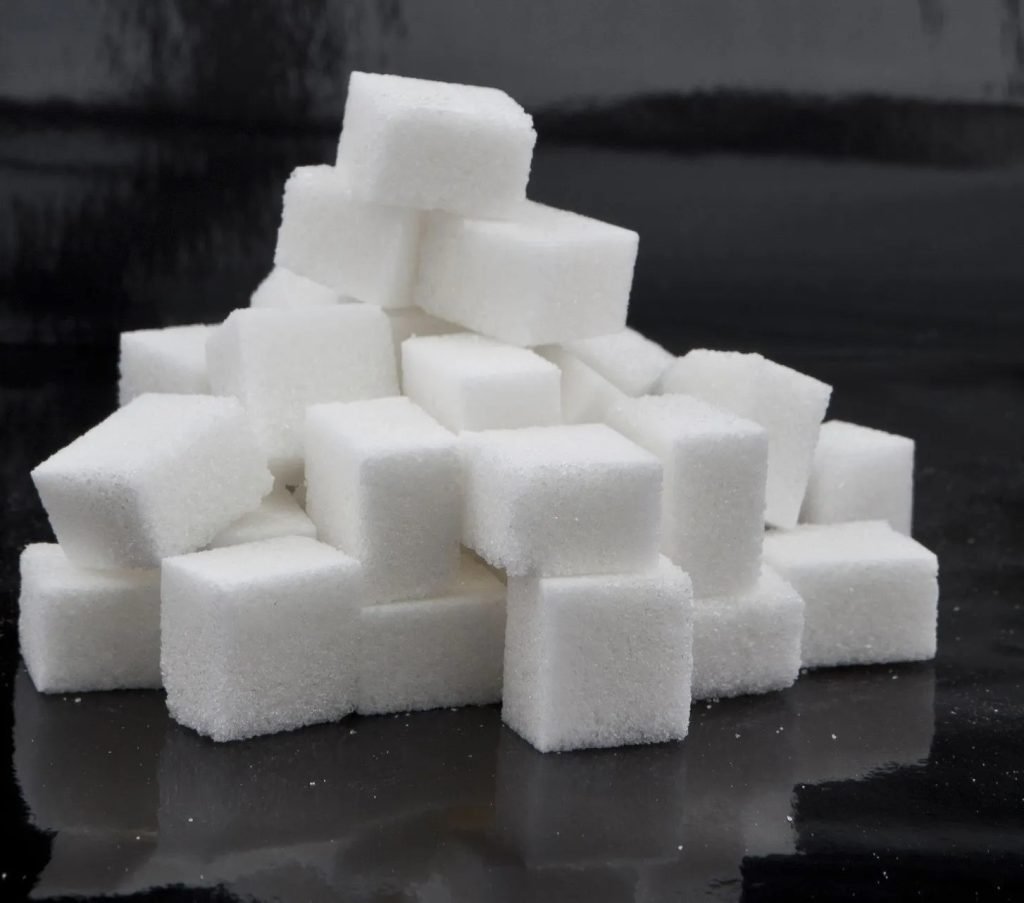
If any lobby most influences and controls the entire ethanol industry, it is without doubt the country’s well-known ‘sugar lobby’, which these days enjoys the patronage of the Central government’s most favoured industrialists. Indian politics, after all, has been controlled for decades by the capitalists of sugar, sugarcane or sugar mills. The politics of sugarcane farmers has played a particularly major role in states like Maharashtra, Uttar Pradesh and Karnataka. Today ethanol has taken the place of sugar, and in the current popular language it is called ‘liquid gold’. Ever since the saffron flag started flying at the Centre (2014), the advocacy of ethanol began in the name of helping sugarcane farmers and reducing the prices of petroleum products. Gradually the ethanol lobby acquired a strong form. This lobby mainly includes some powerful politicians with agricultural interests, sugar mill owners and controllers of biofuel companies. Now the same lobby is moving beyond the E-20 game and advocating petrol blends like E-22 and E-25, and is putting pressure on the government from its side. However, one cannot overlook the fact that Nitin Gadkari has also been at the forefront of advocating for ethanol-blended petrol from the very beginning.
Who Is Making the Profit?
Two major Singapore-based industrialists play a pivotal role in ethanol production. One of them owns a company producing 2,000 kiloliters of ethanol daily, while the other produces 1,250 kiloliters. One of these companies, ‘Shree Renuka sugars,’ was acquired by the ‘Wilmar Group’ in 2018. Until recently, a prominent Indian industrialist held a partnership in Wilmar, owned by Malaysia’s ‘Palm Oil King’ Kuok Khoon Hong, but withdrew from this partnership last year as part of a calculated strategy. The Central government’s energy policy is more or less aimed at providing a secure and stable market to these ethanol-producing companies, which include companies linked to sugar mills and agro-based firms. The Government of India has assigned the responsibility to its public sector oil companies such as Indian Oil, Bharat Petroleum and Hindustan Petroleum to blend a fixed quantity of ethanol in petrol. To achieve its targets, the government currently procures ethanol from these companies. Notably, these ethanol producers do not even need to search for a market, as the government is already waiting at their doorstep to buy the product.
Ethanol Is Swallowing Our Grain
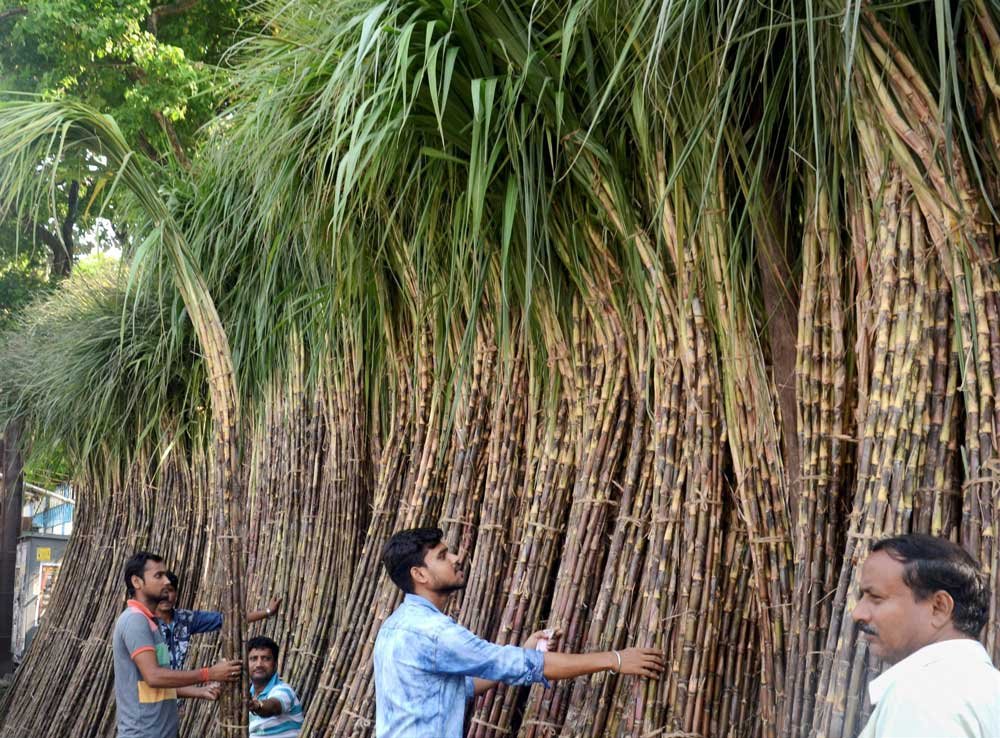
It is not just sugarcane; maize and broken rice are also being sacrificed on a large scale for ethanol production. The government is also providing financial assistance to industrialists for setting up new distilleries and expanding their capacity. Sugar mill owners, in particular, are benefiting greatly from this scheme. At present the sugar lobby of Uttar Pradesh also holds considerable sway; prominent names among them include Balrampur Chini, Triveni and Dalmia Bharat. Although India is the world’s second-largest producer of sugar, in the rush to promote ethanol the DGFT has also sacrificed sugar. This regulator has now transferred sugar from the restricted category (in which exports are temporarily halted) to the ‘prohibited’ category. This means India has completely exited the sugar export market, as a result of which international market dependence has largely shifted to Brazil. Since the sugar lobby has declared ethanol as ‘liquid gold’, after sugarcane the exploitation of food grains has also begun in order to meet ethanol supply. According to figures from AIDA (All India Distillers Association), the total ethanol supply currently stands at 717 crore litres, of which a large portion, 67 percent, comes solely from the exploitation of food grains. So if in the coming days the prices of sugar as well as food grains rise in the country, do not blame Gadkari alone; the beneficiaries are far bigger than him.
Is the final act of the Bankipur drama yet to unfold?
Prashant Kishor’s presence turned the by-election for Bankipur, the traditional stronghold of BJP leader Nitin Nabin, into a truly fascinating contest. Nabin is a five-time MLA from this constituency, a seat previously dominated by his father. Voter turnout this time was seven percent lower than the last election, standing at a mere 35 percent; this indicates a lack of significant enthusiasm even among the BJP’s core voter base. While the constituency has over 60,000 Kayastha voters, traditionally a BJP support base, and a substantial number of Baniya voters, the RJD’s decision to field a Baniya candidate, Rekha Gupta, raised the possibility of a split in the Baniya vote. Votes from the ‘upper castes’ were divided between PK and the BJP. Political observers believe that regardless of whether PK wins or loses, he succeeded in making the electoral battle intriguing. Furthermore, if the BJP’s Neeraj Sinha secures a victory, the margin is expected to be a narrow 10,000 to 15,000 votes. Realizing that the election was becoming a tight contest, Nitin Nabin devoted his full attention to his old constituency, going door-to-door to campaign for Neeraj. Rallies were organized featuring Chief Minister Samrat Chaudhary and Bhojpuri stars like Pawan Singh and Manoj Tiwari; joint rallies were held with alliance partner JD(U); and Chirag Paswan also addressed a meeting. In short, the BJP threw its entire might and resources into this election. Both PK and the BJP spent money lavishly. Sources say that, according to government intelligence reports, over ₹50 crore was poured into this election alone. PK did not lag behind in spending either. His team reportedly hired over 100 young influencers, with the cost for each amounting to around ₹10,000 per day. Given the high concentration of affluent and well-to-do residents in this constituency, it is believed that free coupons for restaurants and five-star hotels were distributed among them. There are also reports of handouts, ranging from rations to cash, being distributed among the poorer sections. Consequently, regardless of the outcome of the Bankipur by-election, PK has, entirely on his own, forced the BJP to its knees here.
Pradhan lost his ministerial post, but not his clout
In the realm of politics, it is rare to see a player, seemingly down and out in the high-stakes game of chess, retain their political relevance intact. Even though the Education Minister’s plans were extinguished by the whirlwind 36-day protest led by ‘Gen Z’, he was welcomed with ‘Mithila Phag’ cheers, and garlands and that too, by BJP MPs. People had assumed that Pradhan would meet the same fate as his predecessors, Smriti Irani, Prakash Javadekar, or Nishank. However, Pradhan defied these popular notions because behind him stood the Chanakya of the BJP, steadfast like a rock. Perhaps this was the reason why, when government representatives J.P. Nadda and Dr. Jitendra Singh were negotiating with the Cockroach Party’s Ranka and Saurav Das, they repeatedly tried to explain that “they could remove Pradhan from the Education Ministry and assign him elsewhere,” but the Cockroach Party was unwilling to settle for anything less than Pradhan’s resignation. Now, it is being believed that the saffron party, instead of sidelining Pradhan, will glorify him. For this, two theories are being discussed. One is that he could be made the party’s national general secretary in the organization and given charge of Uttar Pradesh. Meanwhile, Pradhan’s personal wish is to return to his home state, so could he be made the next Chief Minister of Odisha, replacing Majhi? However, for this, it will be essential to see what Prime Minister Modi himself thinks about the entire matter. According to sources, PM Modi is said to be not at all pleased with the way BJP MPs welcomed Pradhan at the Parliament complex after his resignation. The PM feels that this could send a negative message to the younger generation, especially ‘Gen Z,’ regarding the BJP. Because the NEET paper leak claimed the lives of so many students, yet we are now honouring the very person responsible for it. It is said that PM Modi himself played a pivotal role in securing Pradhan’s resignation; sources indicate that when the ‘Gen Z’ protest was at its peak, the PM met with top police and intelligence officials to seek details about the situation. An Intelligence Bureau (IB) report revealed that the ‘Gen Z’ movement was spreading like wildfire across the country, reaching a flashpoint in cities like Mumbai, Pune, Satara, Patna, and Prayagraj, and warned that if left unchecked, the situation could spiral out of control. Reportedly, it was then that the PM spoke to Pradhan and asked him to resign. This conversation likely took place on July 24, and by the very next morning, July 25, Pradhan had submitted his resignation.
What Happened to Shehzad Poonawalla?
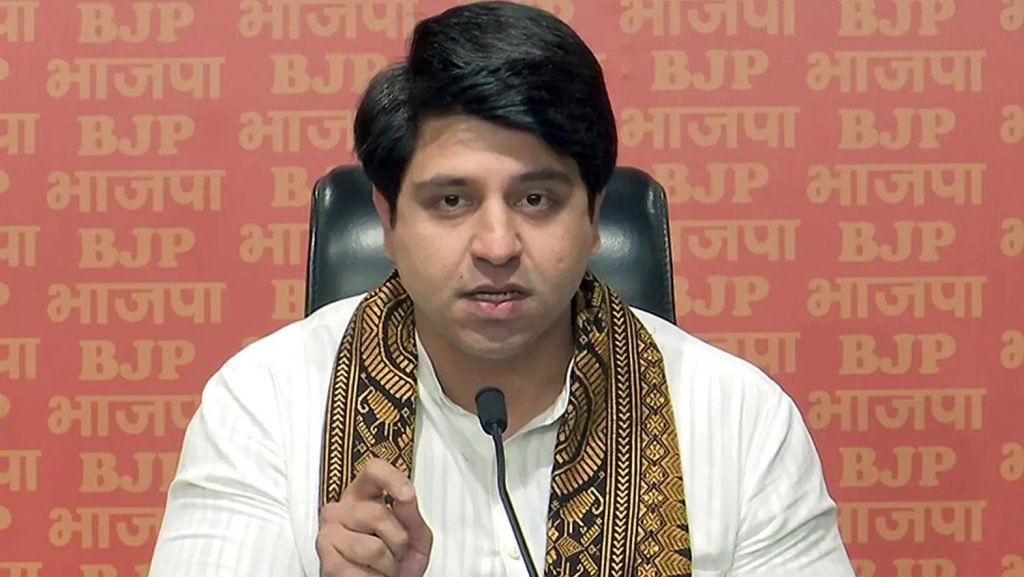
What suddenly happened to Shehzad Poonawalla, the party’s national spokesperson who left Congress and joined BJP, that he removed the ‘National Spokesperson BJP’ designation from his X account’s bio and went into hiding? It is also being said that he has left the BJP as well. According to sources, Shehzad used to be the apple of the eye of former BJP National President JP Nadda, who not only gave him prominence but also promoted him within the party. Since the party’s command came into Nitin Nabin’s hands, it is said that Poonawalla’s speaking style is not pleasing to the President. It is also being heard that Shehzad had hopes for a Rajya Sabha seat for himself, but the party high command dashed his hopes by saying, ‘He should not be in such a hurry.’ The sources also indicate that Shahzad had approached a BJP-ruled Chief Minister on behalf of his friend, an industrialist, to get some work done. The Chief Minister then informed Delhi about the matter, following which B.L. Santosh gave Shahzad a stern dressing-down, which led to his disillusionment with the BJP.