Tridib Raman
The saffron politics of Uttar Pradesh is wearing a new face every day. Delhi’s intentions of managing the state’s Chief Minister Yogi Adityanath are facing fresh challenges every single day. On the political chessboard of moves and counter-moves, Yogi too is playing every move with extreme caution. According to sources, Yogi spoke to PM Modi and RSS chief Mohan Bhagwat on the phone and prominently placed three demands before them: that learning from the mistake of the 2024 Lok Sabha elections, his opinion should be given top priority in the distribution of party tickets for this Assembly election; that Party General Secretary Sunil Bansal should be kept away from the UP elections; and that there should be no buying and selling of party tickets, meaning no candidate should grab a ticket merely on the strength of money. It is said that Delhi has agreed to Yogi’s second and third demands, but uncertainty still remains over whether in the upcoming Assembly elections tickets will be given only to candidates of Yogi’s choice. It is being assumed that BJP strategist Amit Shah, along with Party General Secretary Vinod Tawde and State President Pankaj Chaudhary, may take this important decision. Meanwhile, Yogi has taken the remarks of his state president Chaudhary somewhat seriously that in 2027 the Chief Minister of UP will be the choice of the BJP’s elected MLAs. Yogi fully understands the implications of these statements. That is why he has already started finalising the list of his trusted ticket aspirants on whom he can strongly stake his claim in the election committee meeting.
What Is Delhi Thinking?
Tridib Raman
While Yogi Adityanath has increasingly found himself under pressure, Delhi, seemingly unperturbed by these developments, is working relentlessly to give fresh momentum to the BJP’s preparations for the upcoming Uttar Pradesh Assembly elections. As part of this exercise, Union Home Minister Amit Shah will be on a two-day visit to Uttar Pradesh on October 30–31. According to sources, Shah will review the BJP’s preparations for the forthcoming Assembly elections during his stay in Lucknow and attend a meeting of the party’s state working committee. Before this, on October 25, PM Modi is set to visit his parliamentary constituency Varanasi to watch the ‘Air Show.’ So how could BJP president Nitin Nabin stay behind? He too is visiting Azamgarh on October 27. In fact, the BJP’s Chanakya wants to tighten up the party’s election preparations before Diwali. On one hand, he wants to curb the factionalism prevalent in the state BJP, while on the other hand, he also wants to engage in efforts to appease the disgruntled allies of the NDA. His special attention is on BJP ally leaders like Om Prakash Rajbhar and Sanjay Nishad, who have been singing their own tune for some time now. It is said that Shah has entrusted the most important responsibility to his loyalist Vinod Tawde, who has been touring district after district of UP for quite some time, searching for worthy candidates for the party. Tawde is also getting ground-level surveys conducted in every assembly constituency of UP; in this survey, along with investigating grassroots issues, worthy and popular candidates are being tested on the touchstone of public opinion.
Eclipse on SP-Congress Friendship
According to sources, the saffron leadership in Delhi is putting in every effort to ensure that, no matter what, the Congress-SP alliance should not take shape in the UP election. For this, the saffron leadership is ready to adopt every strategy of saam-daam-dand-bhed (conciliation, inducement, punishment, and division). Sources say the leadership has entrusted this important responsibility to its trusted confidant Dhanraj Parimal Nathwani, who recently entered the Rajya Sabha on the SP quota, to ensure that under no circumstances is any electoral coordination allowed between the SP and Congress. There must be a reason why October is drawing to a close, yet discussions on seat-sharing between the Congress and the Samajwadi Party (SP) have not even begun. According to sources, the deadlock stems from a fundamental disagreement between the two parties. The SP leadership wants the Congress to submit its list of prospective candidates as soon as possible, enabling it to assess their popularity and electoral strength constituency by constituency. The Congress leadership, however, takes a distinctly different view. It firmly believes that selecting its own candidates independently is the party’s prerogative, and questions why an alliance partner should seek to intervene in the process. The Congress, for its part, wants the SP to first hand over a list of constituencies earmarked for the Congress quota. This, it believes, would allow the party to clarify its position on the number of seats it expects to contest and the selection of candidates. Keeping in mind that there should be better coordination between Akhilesh and Congress, the party leadership hastily announced Aradhana alias Mona Mishra as its State President in place of Ajay Rai, because everyone knows that Mona’s father, Pramod Tiwari, has always had extremely cordial relations with the Mulayam family. On the other hand, the Congress leadership is continuously haunted by the fear that Akhilesh is somewhere under BJP’s pressure, it was at BJP’s wish and saying that he hastily handed over the Rajya Sabha seat to BJP loyalist Dhanraj Nathwani; otherwise, until then Akhilesh had promised this seat to former IAS officer Alok Ranjan. It is also being said that Alok Ranjan had even prepared all the papers for this, but at the last moment a phone call from Delhi reached Akhilesh and then the whole game turned.
With Which of Its CMs Is the BJP Disillusioned?
A little over a fortnight ago, when Suresh Soni, the RSS Sah-Sarkaryavah (Joint General Secretary), travelled to Delhi to meet Prime Minister Narendra Modi, the conversation turned to a BJP chief minister from one of the Hindi-speaking states. According to sources, the Prime Minister expressed considerable dissatisfaction with the chief minister’s style of functioning. Sources suggest that Modi was also displeased by the recurring allegations of corruption levelled against the chief minister. He reportedly told Soni in unequivocal terms: “You should start looking for an alternative to this person right away. The longer he remains in office, the greater the damage to our reputation.” Sources further claim that the BJP chief minister in question enjoys Soni’s special backing within the RSS. Soni is said to have attempted to offer some explanations in the chief minister’s defence, but the Prime Minister was reportedly unwilling to hear them. Upon returning to the state capital, Soni is said to have conveyed the Prime Minister’s sentiments to the chief minister. On hearing this, the chief minister reportedly rushed to Delhi and repeatedly sought an appointment with Modi. However, when he failed to secure a meeting, he approached a senior RSS functionary in Delhi, along with RSS Sah-Sarkaryavah Arun Kumar, and laid out his grievances. The chief minister reportedly stressed how, even during his relatively brief tenure, he had served the RSS and the BJP with complete dedication, contributing his time, energy and resources. He also allegedly highlighted the substantial contribution he had made to the party fund. The RSS is said to have advised the chief minister to bring greater transparency to his functioning and work towards improving his public image.
When will the remaining Monsoon Session of Parliament be held?
It appears the government has almost finalised its blueprint to implement the remaining term of the delayed Monsoon Session. Sources indicate that the leftover Monsoon Session could be convened any day in the coming days. The government intends to pass amendments to the Women’s Reservation Bill and the Delimitation Bill during this session. It is said that the government’s strategists have already managed the necessary numbers of MPs in the Lok Sabha to get the Delimitation Bill passed. In this regard, the strategists have maintained continuous dialogue with the DMK and the SP, from which they have received positive results. The DMK has 22 MPs in the Lok Sabha and 8 in the Rajya Sabha. The main reason behind DMK supporting the BJP seems to be that “it wants to teach Congress a lesson for what it has done.” Therefore, instead of completely opposing the Delimitation Bill, its stance has now become one of conditional support. It is said that the major conditions put forward by the DMK in exchange for supporting the Delimitation Bill or walking out of the House during voting that day are: the allocation of Lok Sabha seats should remain based on the 1971 Census, and this should be “frozen” for the next 25 years. If a uniform 50% increase is made, a clear list of seats should be provided. On the other hand, the government’s strategists are explaining to Akhilesh that “once the Delimitation Bill is passed, Uttar Pradesh’s Lok Sabha seats will increase from 80 to 120 and Assembly seats from 403 to 600, which will increase the state’s representation.” Akhilesh is also finding this argument appealing, but can he risk angering the large Muslim voter population of the state by voting directly in favour of the BJP on this issue?
Naidu Forging New Alliances
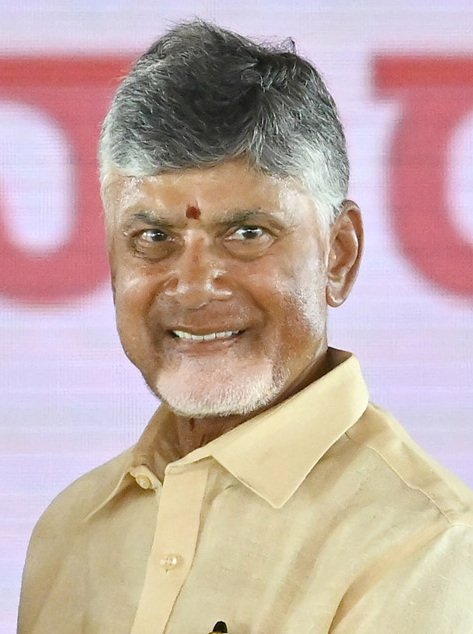
TDP chief Chandrababu Naidu is skilled at counting even the feathers of a flying bird. Seeing the disillusionment of the country’s youth with the Delhi-led government in recent times, he has already started weaving the fabric of alternative politics. He knows the truth that “the Modi government at the Centre is still dependent on his support.” With the intention of keeping pressure on the BJP-led Centre, he has extended a hand of friendship towards the new Chief Minister of neighbouring Tamil Nadu, Joseph Vijay. At Naidu’s invitation, Vijay was prominently present at the Vijayawada Utsav 2.0 last week. Naidu also welcomed Vijay with an open heart and a red carpet in his state; Vijay was made the chief guest at this Andhra government Dasara programme. In fact, through Vijay, Naidu has killed two birds with one stone: first, he wants to keep pressure on the NDA government at the Centre so that “the BJP does not take his support lightly”; second, he wants to send the message to Gen Z and the youth that “he wholeheartedly supports their demands and sentiments.” Because the popularity of Tamil star Vijay is highest among Gen Z and the youth. Needless to say, Naidu’s eyes are already fixed on the 2029 Lok Sabha elections as well.
A Hologram, a Spiritual Legacy and a Political Message
This Friday, Prime Minister Narendra Modi inaugurated the Chinmaya Amrit Mahotsav at Bharat Mandapam in New Delhi, where he also engaged in a holographic conversation with Swami Chinmayananda. It was an innovative experiment of its kind, carrying subtle signals of a long-term political strategy. The global conference organised as part of the Amrit Mahotsav was conceived with the aim of connecting with the country’s youth. Through the holographic interaction, the Prime Minister brought to life his meeting with Swami Chinmayananda in Vadodara 33 years ago. The conversation was also livestreamed. It is worth recalling that Swami Chinmayananda Saraswati shared a deep association with the Sangh Parivar. He was among the founders of the Vishwa Hindu Parishad (VHP), established in 1964, and became its first president. Swami Chinmayananda also commands a substantial following in the southern states. Through this initiative, Modi appeared to be pursuing a dual objective: creating an opening for the BJP to expand its political presence in southern India while establishing a direct connection with young people, many of whom have seemed somewhat disenchanted with him in recent times.