Tridib Raman
Rahul Gandhi is attempting to conduct several experiments on the ground simultaneously. Trusted sources close to Rahul reveal that he is working on a new strategy to counter the BJP and the RSS in their own style. Rahul has recently assembled a new team of advisors around him, many of whom are educated abroad. Most of them are young professionals. It is said that Rahul has arrived at the conclusion that “the RSS has played a crucial role in propelling the BJP so far ahead, having captured the hearts and minds of the Indian masses by taking recourse to Indian culture and nationalism.” Now, Rahul’s new team is also young and is engaged in strengthening its connection with ‘Bharat’. Very soon, Rahul is going to launch a ‘Yuva Rozgar Yatra’ so that contemporary issues like unemployment and inflation can be raised to connect the young generation with the Congress. Perhaps this is the first time in the history of the Congress that the party high command will establish direct communication with its 700 district presidents, in order to strengthen the party cadre at the grassroots level. Rahul wants to sideline the old satraps and bring forth a new leadership within the party. Leaders who have gradually turned into party fiefdoms will be shunted aside. Rahul’s special focus is on the southern states; he is working on new plans for the Congress’s comeback there. In addition, amidst the clamour over EVMs and vote theft, Rahul is running a pilot project of his ‘Vote Rakshak Abhiyan’ in five select Lok Sabha constituencies across the country. If this pilot proves successful, preparations are in place to give this ‘Vote Rakshak Abhiyan’ a wider shape before the 2029 general elections. Through this, he also wants to create a nationwide network of trained volunteers. In states where elections are due in the coming months such as Gujarat, Goa, Punjab, Uttarakhand, and UP, Rahul will undertake as many tours as possible. A beginning could be made in a state like Rajasthan on how to hand over the party leadership into young hands; there, Sachin Pilot has been asked to remain prepared for this. Rahul’s thinking is that “in the strengthening of opposition unity, he will not come under the pressure of the opposition from time to time, nor will he follow them around; rather, he will compel the opposition to fall in line behind the Congress.”
Tale of the UP Organisation, Rajnath as Storyteller
Tridib Raman
The art of narrating tales through the quiet whispers of the political wings, one could learn this from this formidable Thakur leader of UP. He also knows well the craft of silencing his opponents within the party through his eloquent silences. This time around, when the BJP was giving its final shape to the organisation in Uttar Pradesh, it is said that the party’s state organisation minister, Dharmpal, dug his heels in over the name of Rajnath Singh’s MLA son, Pankaj Singh. Before state president Pankaj Chaudhary, the organisation minister’s argument was: “He (Pankaj) has been a general secretary three times, but how much time has he devoted to the party and the organisation? How many people does he manage to meet?” Pankaj Chaudhary, who understands the nuances of politics, had already figured out that some discord was already brewing between the party’s organisation minister and the Noida MLA, Pankaj Singh. Gauging the seniority and stature of Rajnath Singh, the state president placed a proposal before Dharmpal: “Let Pankaj go; we can give this post to Rajnath ji’s younger son, Neeraj Singh.” But the organisation minister would not agree. His contention was: “Neeraj is being inducted into the organisation for the first time, so how can he be made a general secretary? We can make him a Secretary in the state organisation.” As this dilemma was swirling around, word of it reached Rajnath Singh. When he arrived in Lucknow, he summoned the state president for a meeting and said: “If you people feel that no one knows Neeraj, then please do not give him any post; he can wait a little longer.” Rajnath ji’s words struck Chaudhary like a bolt from the blue. He rushed to Delhi and sought an audience in the court of the BJP’s Chanakya; the saffron supremo was also consulted. The supremo’s only remark was: “It doesn’t matter who belongs to whom; what matters is how you bet on young and hardworking people who can give their all in the 2027 UP elections.” Then, in a flurry, a middle path was found, and Neeraj Singh was entrusted with the significant responsibility of the post of vice president in the UP organisation.
Why is PK’s gaze fixed on Bankipur?
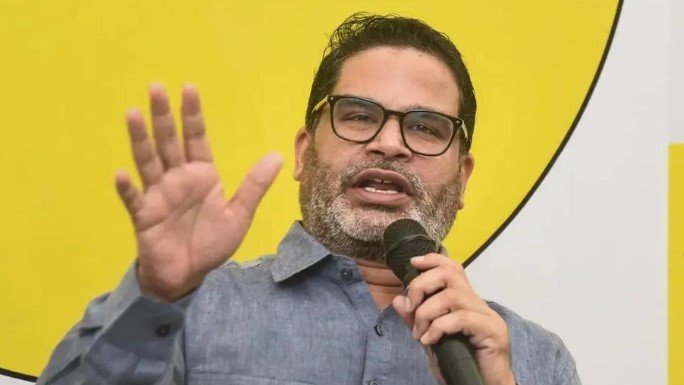
Prashant Kishor, once a master strategist adept at weaving political and electoral strategies, is indeed seeing his stars on the wane these days. In order to maintain his political relevance, he has been constantly on the move for quite some time. When Mamata lost the election, she then poisoned Akhilesh’s ears against PK, and consequently, Uttar Pradesh became a distant dream for him. He also tried very hard to secure a meeting with Congress leader Rahul Gandhi; eventually, he did manage to meet Priyanka Gandhi. However, Priyanka’s role in Congress politics these days is somewhat limited. So, when PK’s plans didn’t materialize with the Congress either, he went straight to Hyderabad to meet TRS leader Chandrashekhar Rao. But even Rao did not take a liking to PK’s proposal. Sources reveal that Rao told PK in no uncertain terms, “Working with you will be difficult for us because your credibility is questionable.” Now, in a bid to reclaim his lost political identity, PK wants to try his luck in the by-election for the Bankipur assembly seat. It is worth noting that this seat fell vacant due to the resignation of BJP’s national president, Nitin Nabin. This is a constituency dominated by Kayasthas, with around one hundred thousand Kayastha voters, and it is considered a traditionally strong seat for the BJP. There is also a significant number of upper-caste voters here, and PK is confident that after the Bharat Tiwari encounter case, the upper castes will unite in his favour. It is said that PK has secretly reached out to both Rahul and Tejashwi, requesting them, “Do not field candidates from RJD and Congress here and instead support me in the election, so that the BJP can be made to feel the strength of a united opposition.” If sources are to be believed, Rahul has agreed to this proposal, but Tejashwi is not ready to relent. Tejashwi’s grievance is that “PK has always targeted me.” Rahul is still trying to persuade Tejashwi for PK’s sake, so that the scattered opposition’s chances on this seat are not completely wiped out.
Venugopal’s Changing Mindset
KC Venugopal, the general secretary (organisation) of the All India Congress Committee, can be counted as the third most influential leader after Rahul Gandhi and Mallikarjun Kharge. Over the past decade or so, the one quality that has served Venugopal immensely is his constant hovering around Rahul Gandhi like a shadow. He prefers to dedicate more time to the Gandhi family than to the discharge of his organisational responsibilities. He is often spoken of within his own party in these terms: “He surrounds Rahul ji at all times, as if he is not the general secretary but some SPG commando.” His lack of easy availability to party workers also makes him unpopular within the party cadre. Furthermore, his weak command over both Hindi and English has always made his communication skills poor. Until now, he made no effort to change himself; neither did the doors of his home or office open for party workers, nor did he make any attempts to improve his communication skills. However, after falling behind in the race for the Chief Minister’s post in Kerala and amidst speculations of a major reshuffle in the All India Congress Committee, the colour of this bright season has darkened. Now, KC has begun efforts to change himself. He has now started touring states, beginning with Bengal, followed by Punjab, and now tours to other states are on the cards. There is also speculation that he could be made the president of the Kerala Pradesh Congress Committee in the coming days.
Saffron Benevolence Smiles Upon Captain Once Again
Ever since the results of the Congress’s ground survey in Punjab came to light, parties like the BJP and AAP have also been forced to alter their strategies. This survey report has just been submitted by Ajay Maken to Rahul Gandhi, stating that “if the Congress manages to win over just the Jat Sikh and Dalit voters in Punjab, its chances of victory in the upcoming assembly elections will improve significantly.” As soon as the report arrived, Amrinder Singh Warring was retained as the state president; earlier, there were preparations to replace him. Former Chief Minister and Dalit leader Charanjit Singh Channi, who had been disgruntled, has been made the head of the election campaign committee. Pratap Singh Bajwa has been retained as the Leader of the Opposition in the Assembly. At the same time, preparations had also begun for the homecoming of former state Chief Minister Captain Amarinder. As soon as the saffron court in Delhi got wind of this, Captain was immediately summoned to Delhi, and a crucial meeting with the party’s Chanakya was also convened. Captain was first offered a Rajya Sabha seat, but it is said that Captain declined it. Thereafter, in line with Captain’s demand, his appointment as the Governor of Himachal or Haryana is being considered. Himachal, because Captain owns considerable land there, and Haryana, because its Raj Bhavan is located in Chandigarh itself, which is convenient for Captain.
Brahmins Are Sulking, How to Placate Them?
Is the Brahmin community of UP nursing a grudge against its preferred political party, the BJP, these days? Why else would Akhilesh, a maestro in singing the PDA tune, not want to let go of any opportunity to please the Brahmin community? Sources reveal that in the upcoming UP elections, Akhilesh may field a large number of Brahmin candidates on the Samajwadi Party’s cycle symbol. Akhilesh is preparing to hold a grand programme across the state on the birth anniversary of Janeshwar Mishra. As a Brahmin leader of the UP BJP candidly admits, “Continuing to support the BJP is not a compulsion for our community. Earlier, the restoration of temples was a major issue, but now even that issue has become secondary.” Although Jitin Prasada has been made a minister at the Centre and Manoj Pandey in the state government, the Brahmin community considers this step inadequate. It is said that for the time being, the Brahmins have completely sealed their lips; when the time comes, or by November-December, they may take a major decision. Besides, apart from the BJP, parties like the SP, BSP, and Congress in UP also lack any prominent Brahmin face. Whatever Brahmin leaders these parties have groomed, their influence remains confined to their respective constituencies. The BSP did have Satish Chandra Mishra, who played a monumental role in aligning the Brahmins with Behenji. Now, even he is not that active owing to his declining health. Hence, the Brahmin community may also find it difficult to decide: “Even if we let go of the saffron fold, where do we go then?”
Nabin’s Team Gets Final Approval
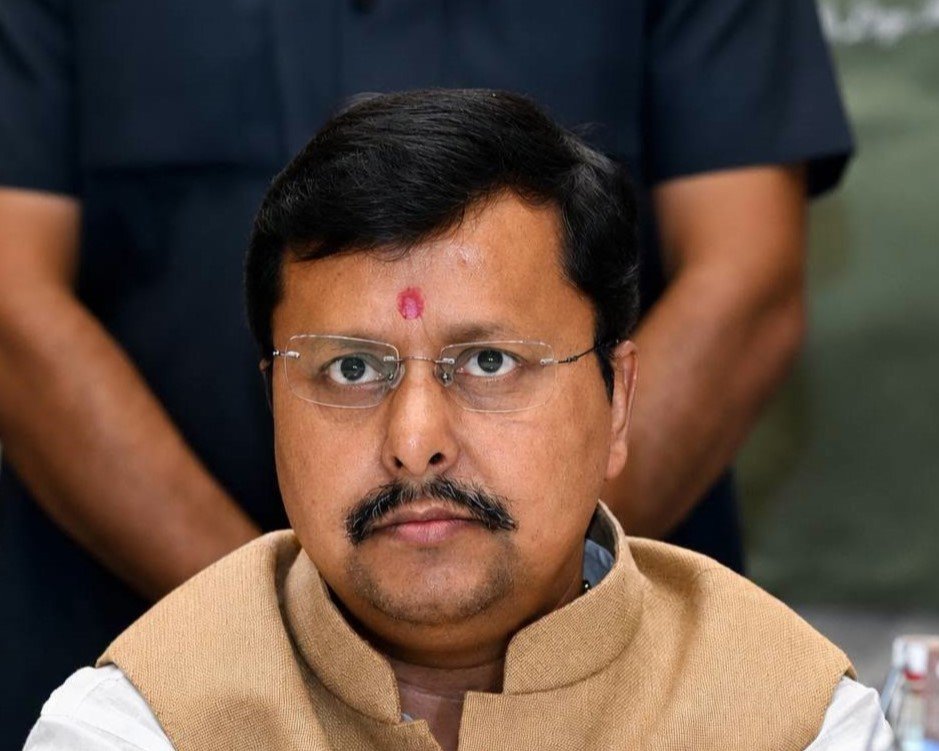
Just recently, BJP President Nitin Nabin went to meet the BJP’s Chanakya, Amit Shah, and spent about three hours in deliberations with him. If sources are to be believed, the BJP President had gone there to seek approval for the blueprint of his new team, where several names were discussed in detail and this ‘Team Nabin’ was given its final shape. The President may announce his new team any day now.