Tridib Raman
Raghav Chadha, once counted among Arvind Kejriwal’s “blue-eyed boys,” has shaken the ideological foundations of the Aam Aadmi Party (AAP). On Friday, when three AAP Rajya Sabha MPs, Raghav Chadha, Ashok Mittal, and Sandeep Pathak, formally announced in a press conference that 7 out of AAP’s 10 Rajya Sabha MPs had left the party, it caused a political uproar. This incident also made it clear that, under Raghav’s leadership, efforts to gather support from two-thirds of AAP MPs had been going on behind the scenes for quite some time. If we begin with Raghav, the writing on the wall for his exit had appeared nearly two years ago, when a major “slap incident” occurred at Punjab Bhavan in New Delhi. At that time, Raghav was considered the “Super CM” of Punjab. An AAP Sikh MLA had approached him regarding the transfer of his brother-in-law. During that period, open dealings were common, and the discussion escalated into a physical altercation. Raghav later complained to Kejriwal, demanding that the “ill-mannered MLA” be immediately suspended from the party. However, when the MLA tried to present his side to Kejriwal, he couldn’t even get an appointment. It is said that the MLA, along with six others, then decided to leave AAP. When Punjab CM Bhagwant Mann got wind of this, he intervened and mediated peace between them and Kejriwal. But by then, Raghav had become disillusioned with Kejriwal. He soon left for London for eye treatment. Upon returning, AAP had seemingly lost its place in his mind. Gradually, his proximity to BJP increased, and over time, he was allegedly seen as BJP’s man within AAP. Important party information reportedly began leaking to BJP, and he became a valuable asset for them. It is believed that around the upcoming monsoon session of Parliament, when the Modi cabinet undergoes reshuffle, Raghav might be given a significant role as a Minister of State. When his Rajya Sabha term ends around 2028, BJP may re-nominate him, and he could contest the 2029 Lok Sabha elections from Punjab on a BJP ticket.
“You too, Sandeep?”
Tridib Raman
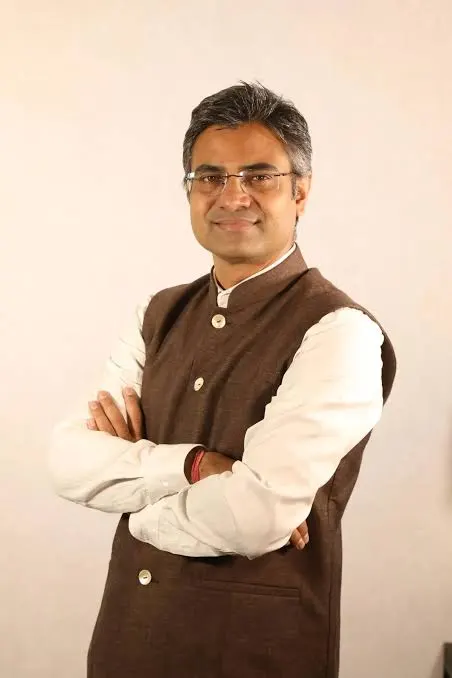
If Shakespeare were writing this, this might have been the first line from his central character. The most surprising exit from AAP has been that of Sandeep Pathak. He once held great influence in Punjab’s AAP government and was considered the party’s Chanakya. He was very close to Kejriwal and played a crucial role in bringing AAP to power in Punjab. His coordination with party workers, booth-level management, and deep analysis of electoral data were highly valued by the party leadership. Now that he has joined BJP, he has likely taken along significant internal information. BJP would benefit from his booth management expertise and analytical voter data, which could help shape electoral strategies in Punjab. Pathak transitioned from academia to politics, he was an assistant professor at IIT Delhi and a research associate at Oxford University and NIT, with education from Cambridge. He was elected to Rajya Sabha from Punjab in April 2022. As for Ashok Mittal, he had recently been made AAP’s deputy leader in the Rajya Sabha, replacing Raghav Chadha. Mittal is also the founder and chancellor of Lovely Professional University. However, being under ED scrutiny and repeated raids on his institutions reportedly pushed him into a corner. Regarding cricketer Harbhajan Singh, he was very close to Punjab CM Bhagwant Mann, who played a key role in sending him to Rajya Sabha. However, sources suggest that recent investigations involving a relative from his wife’s side by the NIA may have forced the former spinner into making this political move. Rajendra Gupta, owner of the Trident Group, is primarily a businessman with strong involvement in exports. Like a businessman, he pragmatically chose BJP over AAP.
Raghav gets a Jolt on Social Media
Tridib Raman
Raghav Chadha, who is active on social media, received a major shock when 1.3 million, i.e. 13 lakh, followers dropped from his Instagram as soon as he left AAP and joined BJP. This shows that the younger generation did not accept this move by Raghav Chaddha. First, Arvind Kejriwal called Sandeep Pathak at night and said, “I’m in shock that you’re leaving AAP. But I have one request — don’t go to the BJP with this saanp (snake).” The most amusing part was when Raghav Chadha told BJP National President Nitin Nabin, “Nitin ji, I would like to meet the PM tomorrow or the day after. Please fix a time and let me know.” Hearing this, Nitin Nabin was stunned and took Raghav aside, saying, “You’ve just joined the BJP, you need to understand the decorum here. If you want to meet the PM, email his office and request an appointment.”
Will Mann also Surprise Everyone?
Tridib Raman
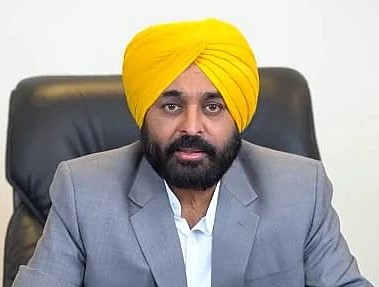
There is significant political chatter regarding the possibility of the BJP managing to break away 62 AAP MLAs in Punjab. If successful, such a move would fall outside the purview of the Anti-Defection Law. For context, the Punjab Assembly has 117 seats (noted as 177 in the original text, likely a typo), where AAP holds a dominant 92 seats compared to the BJP’s mere two. However, this “game” will not be easy for the BJP. For one, Bhagwant Mann has significantly tightened surveillance over his MLAs. Furthermore, in almost every meeting, he reminds them of a harsh reality: “The BJP currently has no future in Punjab; the Sikh community, in particular, does not favour them. Anyone who defects to the BJP will face political annihilation.” Meanwhile, BJP strategists are also debating the optics. Even if they successfully topple the government to form their own, what message does that send to the electorate just a year before the state elections? Historically, such a split is unlikely to yield dividends in the upcoming polls because the BJP’s primary hurdle remains the lack of a formidable “local face.” While there was brief consideration of bringing Navjot Singh Sidhu back into the fold, the party remains wary of the “outsized rhetoric” from him and his wife. In a four-cornered contest (Congress-AAP-Akali-BJP), the advantage currently seems to stay with Congress and AAP. The BJP has yet to become the first choice even for Hindu voters in Punjab, a space currently occupied by the other two major players. Consequently, the BJP will have to think a hundred times before making a move in the state.
Who Benefits from the Bumper Turnout in Phase One?
Tridib Raman
In West Bengal, the first phase covering 152 seats saw a record-breaking voter turnout of over 92%, sending a wave of optimism through the “Saffron camp.” Most BJP leaders are confidently claiming they will secure 85–90 of these seats. In the 2021 Assembly elections, the BJP won 77 seats in total, 61 of which came from this specific phase. It is worth noting that the areas that voted in this phase are largely non-Muslim, with the exception of Murshidabad and Malda. The second phase, covering 142 seats, is heavily populated by Muslim-majority areas. Currently, the BJP holds only 16 of these 142 seats. Even if the BJP manages to double its tally in this phase to 32–35 seats, their total projection across both phases struggles to cross the 125-seat mark. In contrast, back in 2021, Mamata Banerjee secured 213 seats with a 45% vote share against the BJP’s 39%. This time, Bengal is witnessing a direct head-to-head between the TMC and BJP, with parties like Congress and the Left expected to pick up only 5–6 seats combined. This suggests that Mamata could still reach the majority mark on her own strength, potentially landing around 170–175 seats.
Will Caste Play a Role in Bengal?
Tridib Raman
Generally, votes in Bengal elections are not cast on the basis of caste. However, this time, “Saffron” (BJP) efforts in this direction have been quite intense. Out of the 294 seats in West Bengal, 68 seats are reserved for Scheduled Castes (SC) and 16 seats for Scheduled Tribes (ST); combined, this figure stands at 84. Since the density of reserved seats was higher in the first phase of the election, the significance of these 84 seats was much greater for the BJP. Typically, the BJP is considered a party of “Urban India,” but in Bengal, this pattern is somewhat reversed. There, the BJP is more popular in rural areas; in Bengal, the BJP’s journey has progressed from the villages to the cities. Consequently, in North Bengal, the BJP focused on the Rajbanshi and Matua communities. The BJP perhaps played the caste card for the first time in Bengal and succeeded in leaving an impact even among men of the upper castes. This election also revealed that the BJP has firmly established itself within the vote banks, cadres, and areas of influence of the Left parties. As a result, the entire election turned into a Mamata vs. BJP contest, and local issues vanished from the electoral menu.
Is Lalu Yadav Rethinking Tejashwi’s Role?
Tridib Raman
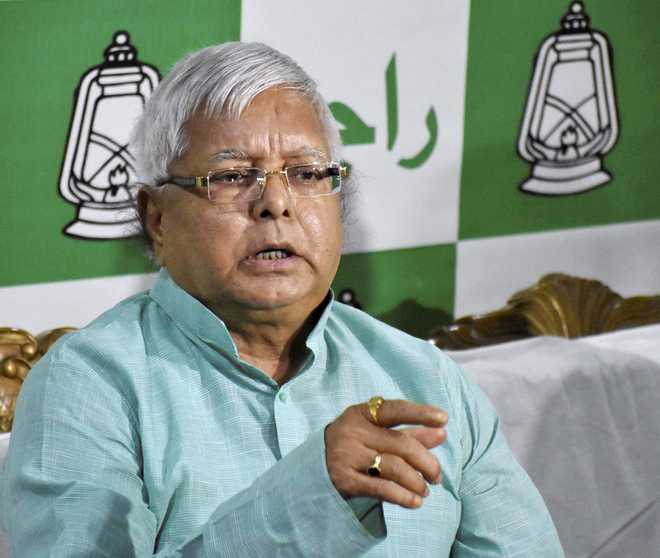
All is not well within Lalu Yadav’s family. This began with Rohini Acharya leaving the house. Lalu is saddened; he feels that Tejashwi has his own sense of pride (or ego) and is unable to keep the family united. It is said that Tej Pratap also left the house because of Tejashwi, a situation that is deeply troubling Rabri Devi. She wants the family to remain as one. Recently, veteran leaders and old companions of Lalu Yadav met him; their collective complaint was solely regarding Sanjay Yadav. They argued, “If Sanjay Yadav is the one running the party, why not formally make him the party’s Working President?” Now, Lalu has also started feeling that perhaps Tej Pratap deserves another chance. Rabri is also adamant about uniting the two brothers. Consequently, at Lalu’s request and insistence, Tej Pratap recently met with election strategist Prashant Kishor. They discussed a roadmap for the future. PK also agreed that “if one truly wants to challenge the BJP in Bihar, not only must the Lalu family be united, but the anti-BJP parties in the state must also come together.”
Strategic Sidelining?
Is UP CM Yogi Adityanath being restricted from campaigning in the second phase of the West Bengal elections? Reliable sources suggest that BJP strategists believe Yogi’s aggressive election speeches in Bengal have been detrimental to the party. There is a feeling that the tone he used regarding the Muslim community may or may not have consolidated Hindu voters, but it certainly unified Muslim voters in favour of Mamata Banerjee. The Congress party, which was previously competitive in about a dozen assembly seats, has reportedly been reduced to a fight in only 2–3 seats following this shift in the Muslim vote bank. According to the BJP’s ‘Chanakya’, an unannounced restriction was similarly placed on Yogi’s election rallies during the Assam polls, which allegedly yielded positive results for the party there. As the second phase of the Bengal elections features a high concentration of Muslim-majority areas, the BJP does not want these votes to transfer en masse to the Trinamool Congress (TMC) as a reactionary measure.
