Tridib Raman
After a prolonged political struggle and intense maneuvering, D.K. Shivakumar has finally succeeded in securing the post of Chief Minister of Karnataka. Rahul Gandhi played an indirect but crucial role in helping him attain the position, while Sonia Gandhi and Priyanka Gandhi reportedly worked behind the scenes to make it happen. When Congress returned to power in Karnataka with a sweeping victory in the 2023 Assembly elections, the party high command devised a power-sharing arrangement between Siddaramaiah and D.K. Shivakumar. Under this formula, both leaders were to serve as Chief Minister for two-and-a-half years each. As the senior leader, Congress’s prominent OBC face Siddaramaiah was given the first term. His two-and-a-half-year tenure ended in November 2025, but since then he had been reluctant to relinquish power in favour of D.K. Shivakumar. When the party leadership in Delhi increased pressure on him, Siddaramaiah suggested three alternative names for the post. His first choice was Dr. G. Parameshwara, a leader from the Dalit community. His second preference was M.B. Patil, regarded as one of Karnataka’s most influential Lingayat leaders after B.S. Yediyurappa. His third and final choice was Satish Jarkiholi, who belongs to the Valmiki Nayaka community. Notably, D.K. Shivakumar’s name did not appear anywhere on Siddaramaiah’s list. According to sources, the Gandhi family played the most significant role in ensuring Shivakumar’s elevation. It is understood that Shivakumar had held several rounds of discussions with Sonia Gandhi beforehand. Sources claim that he assured Sonia and Priyanka Gandhi that he would arrange the necessary election funding for the 2029 Lok Sabha elections and ensure that Congress would have sufficient resources so that no party candidate would face a shortage of campaign funds. At present, Congress governs Telangana, Himachal Pradesh, Kerala, and a few smaller states. Kerala has only recently formed its government. In Telangana, despite Delhi’s expectations, Chief Minister Revanth Reddy has reportedly been unable to contribute substantially to the party’s central fund. Himachal Pradesh, meanwhile, is a relatively small state. Amid growing indications of a leadership change in Karnataka, Rahul Gandhi, at Sonia Gandhi’s insistence, summoned both Siddaramaiah and D.K. Shivakumar to Delhi. He held one-on-one discussions with them. In fact, during the meeting in which Rahul Gandhi bluntly asked Siddaramaiah to hand over the Chief Minister’s chair to Shivakumar, only three people were present: Rahul Gandhi, D.K. Shivakumar, and Siddaramaiah. Rahul had reportedly asked K.C. Venugopal and Ajay Maken to leave before the discussion began. As things stand now, D.K. Shivakumar is expected to be sworn in as Karnataka’s 25th Chief Minister on June 3, along with ten ministers. A further expansion of his cabinet may take place after the Rajya Sabha elections scheduled for June 18.
Siddaramaiah Has Not Yet Surrendered
Tridib Raman
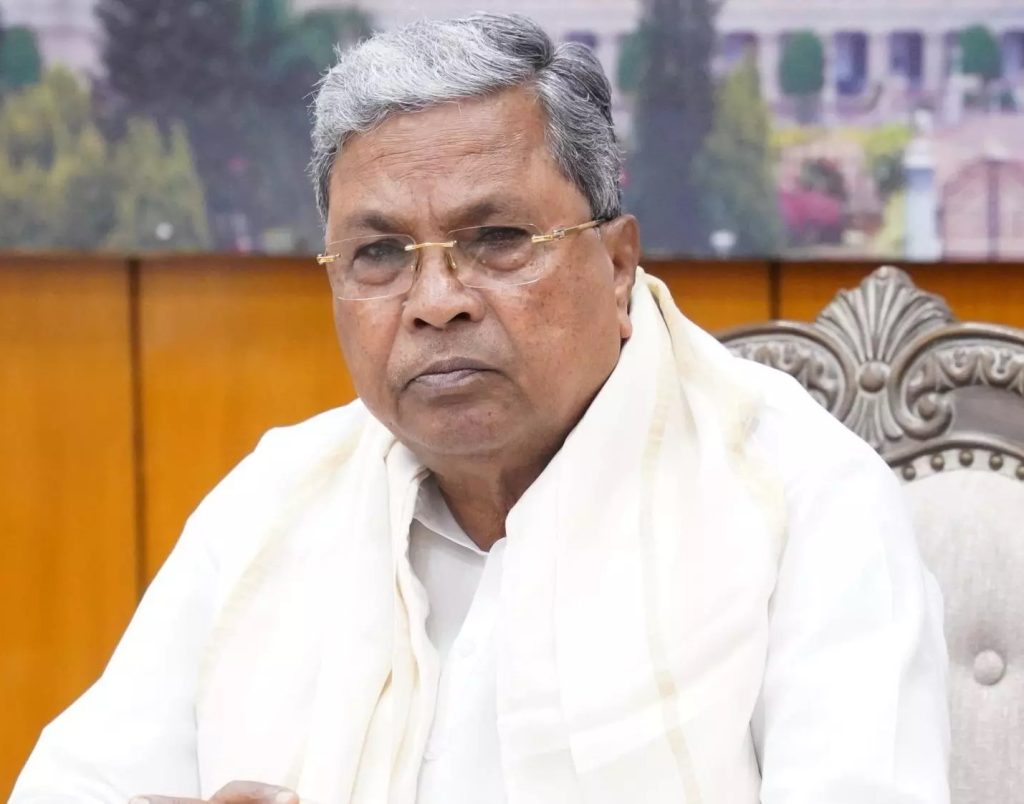
Although Karnataka’s influential OBC leader Siddaramaiah stepped down as Chief Minister on Thursday under pressure from the Congress high command, he is now seeking political compensation for his sacrifice from Delhi. According to sources, when Siddaramaiah recently arrived in Delhi, he met Rahul Gandhi and submitted a detailed list of demands. Sources indicate that his greatest concern is the political future of his son, Yathindra Siddaramaiah. He wants Yathindra to be given a significant role in the D.K. Shivakumar government and, if possible, be appointed Deputy Chief Minister. In addition, Siddaramaiah has recommended the names of his preferred leaders for upcoming appointments to the Rajya Sabha and the Legislative Council. He has also suggested names of close associates for ministerial positions and key portfolios in the new cabinet. Effectively, Siddaramaiah has lobbied for important ministries on behalf of his loyalists. Rahul Gandhi and the Congress leadership are in a difficult position because they cannot simply sideline Siddaramaiah. During his recent visit to Delhi, Siddaramaiah was accompanied by his son Yathindra, who is a MLC. He introduced his son to Rahul Gandhi and later met Congress President Mallikarjun Kharge and Congress General Secretary (Organisation) K.C. Venugopal.
Does Manoj Sinha want to come to Delhi?
Tridib Raman
Jammu and Kashmir Lieutenant Governor Manoj Sinha has been in his post continuously since 2020, now his desire to come to Delhi is probably shaking again, the powerful Bhumihar lobby of Delhi, which likes him very much, is demanding Rajya Sabha for him this time, with the hope that once he is elected to the Rajya Sabha, then the way will be clear for him to become a minister in the Modi cabinet. It will happen. Even before this, when Jagdeep Dhankhar suddenly resigned from the post of Vice President, Sinha’s fans had used his name for this post. Although according to Article 156 of the Constitution, the term of office of Governors is fixed for 5 years, but according to Article 239 of the Constitution of India, there is no fixed term for the Lieutenant Governors of other Union Territories including Jammu and Kashmir. Rather, it is entirely up to the wishes of the President of the country, who can hold office for any period as per the wishes of the Hon’ble President. In any case, Manoj Sinha is considered to be very tactful, he has a close relationship with the top leaders of the BJP as well as the Sangh, for example, Sinha’s closeness with RSS leader Arun Kumar is well known.
Growing Dissent Pushes J&K Congress Leaders Toward Delhi
Tridib Raman
As the celebrations of Bakrid fade, a large group of disgruntled Congress leaders in Jammu and Kashmir is preparing for a “Delhi Chalo” (March to Delhi) campaign. These leaders allege that the Pradesh Congress Committee has fallen under the influence of BJP-PDP sleeper cells and are questioning the party’s top leadership over what they describe as Congress’s growing marginalization in the Union Territory. They are asking why Chief Minister Omar Abdullah has, in their view, largely ignored the Congress despite it being an alliance partner, and why the party’s senior state leaders have remained silent on the issue. Tariq Hameed Karra, the Jammu and Kashmir Congress president and a leader regarded as a personal favourite of Rahul Gandhi, has completed nearly two years in office without making a significant political impact, according to his critics. Meanwhile, Syed Nasir Hussain, the AICC in-charge for Jammu and Kashmir and widely seen as a close confidant of Congress President Mallikarjun Kharge, has become increasingly inaccessible to many state leaders and party workers. As a result, factionalism within the party has now come out into the open. With the central leadership in Delhi seemingly paying little attention to their concerns, a number of senior PCC leaders have begun holding public meetings and rallies, openly criticizing both Karra and Hussain. Leading this dissident camp is CWC member and former PCC chief Vikar Rasool Wani. It is noteworthy that Wani was replaced as state Congress president ahead of the last Assembly elections to pave the way for Karra’s appointment, reportedly at Rahul Gandhi’s insistence. Many of Wani’s supporters continue to view that decision as arbitrary and politically motivated.
One Seat, Many Contenders
Elections for 26 vacant seats in the Rajya Sabha are scheduled for June 18. Three seats are falling vacant from Madhya Pradesh, of which two are expected to go to the BJP and one to the Congress. The Congress seat is currently held by senior leader Digvijaya Singh, whose term is ending. Having already served two terms in the Rajya Sabha, he has reportedly decided not to stake a claim this time. According to sources, Digvijaya Singh would like the party high command to reward his journalist wife with the nomination in his place. Meanwhile, another heavyweight Congress leader from the state, Kamal Nath, has also put forward his claim for the seat. Kamal Nath has reportedly conveyed that if the party does not wish to send him to the Rajya Sabha, it should nominate his son, Nakul Nath, instead. However, both Kamal Nath and Nakul Nath face considerable opposition within the party. Some Congress leaders openly point out that Nakul Nath was allegedly in direct contact with the BJP during 2024, and rumors of his possible defection to the BJP were widespread at the time. A section of party leaders believes that the seat should instead be allotted to a Dalit leader. Other names being discussed for the nomination include Jitu Patwari, Arun Yadav, and Meenakshi Natarajan. Meenakshi Natarajan served as a Member of Parliament from Mandsaur between 2009 and 2014 and is currently the Congress in-charge for Telangana. She is widely regarded as a personal favorite of Rahul Gandhi.
Saffron Beginning in Punjab
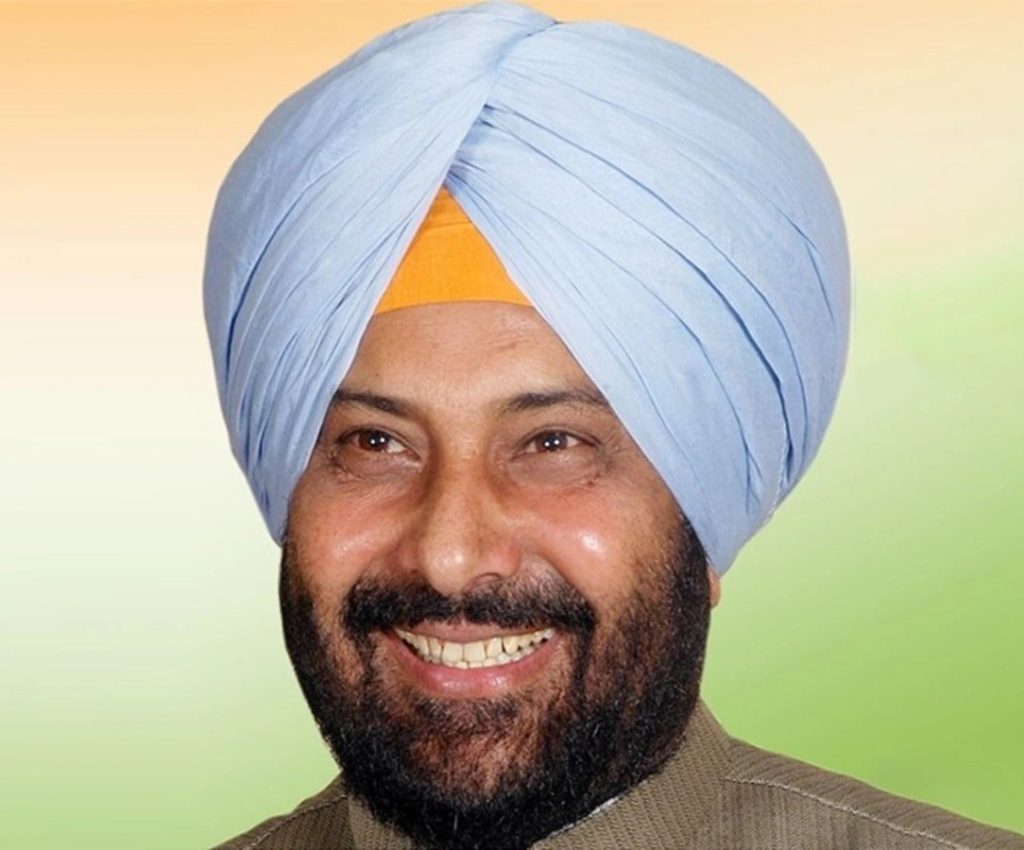
After its success in West Bengal, the BJP has now turned its full attention toward Punjab, where Assembly elections are due next year. Just one day after the appointment of the party’s first Sikh state president, Kewal Singh Dhillon, the results of Punjab’s local body elections provided a morale boost to BJP workers. The election outcome indicated that the party’s influence in urban and semi-urban areas of the state continues to grow. In 2021, the BJP had managed to win only 49 municipal wards. This time, its tally has crossed 170 wards. Although the BJP still finished fifth overall in terms of total wards won, behind the Aam Aadmi Party, Congress, Shiromani Akali Dal, and independents, the performance nevertheless points toward an expanding support base. Significantly, the BJP’s gains were not confined to its traditional strongholds in Hindu-majority urban areas. The party also established a noticeable presence in municipal councils and town committees across districts such as Mohali, Hoshiarpur, Fatehgarh Sahib, Mansa, Patiala, and Fazilka. These results suggest that the BJP is gradually broadening its political footprint in Punjab ahead of the crucial Assembly elections next year.
Supreme Court Promotions Recommended
On May 27, the Supreme Court Collegium (comprising Chief Justice of India Suryakant, Justice Vikram Nath, Justice J.K. Maheshwari, Justice B.V. Nagarathna, and Justice M.M. Sundresh) has greenlit 5 names for promotion to the Supreme Court. Of these five names, four are current Chief Justices of various High Courts, and one is a Senior Advocate. These names include Chief Justice Sheel Nagu of the Punjab-Haryana High Court, Chief Justice Shri Chandrashekhar of the Bombay High Court, Chief Justice Sanjeev Sachdeva of Madhya Pradesh, Chief Justice Arun Palli of Jammu & Kashmir and Ladakh, and the 5th name on this list is Senior Advocate V. Mohana, who has been elevated directly from the Bar by the Collegium. However, interestingly, the notification for these appointments has not yet been issued, but the Bar Association of Jammu & Kashmir and Ladakh has already held a formal farewell party for their Chief Justice.