Tridib Raman
From Uttar Pradesh to Bengal, this election engineer’s self-devised ‘Bansal Model’ is a super hit. This election engineer is none other than BJP General Secretary Sunil Bansal, who has mastered ground-level and micro-management of elections. His election strategy and booth management formula has been so successful in the BJP over the past 12-13 years that both the party and the Sangh have named it the ‘Bansal Model’. A large part of the credit for increasing the BJP’s seats in Bengal from 2 to the magical figure of 207 also goes to this election strategist. Along with his dedicated team of 1,500 people, he works continuously for 16-18 hours, crafting marathon election strategies and then implementing them on the ground. Acting on the insights gained from his vast database and its analysis, Bansal has previously led the BJP to success in four elections in Uttar Pradesh. From 2014 to 2022, in the Lok Sabha, Assembly, and local body elections, the BJP achieved significant victories on the strength of this very ‘Bansal Model’. In the 2024 Lok Sabha elections, when the BJP’s seats in UP dropped sharply from 62 to just 32, the party has once again recalled the ‘Bansal Model’ ahead of the 2027 Uttar Pradesh Assembly elections. Sunil Bansal has already been entrusted with the responsibility of the 2027 UP Assembly polls. Notably, it was the same team under his leadership that achieved the ‘Bengal conquest’. This time, the saffron party’s concerns regarding UP are quite serious. Caste equations are shifting rapidly here, the PDA (Pichhda, Dalit, Alpsankhyak) alliance is demonstrating its independent strength, there is ongoing resentment among the upper castes over the UGC issue, the Brahmin community feels betrayed, internal rivalries among state leaders are harming the party, and there is a visible tug-of-war between Yogi and Delhi. Although the party has appointed Pankaj Chaudhary as the new state president, his impact does not appear to be far-reaching yet. The biggest challenges before the new president Chaudhary include the slipping coordination between the government and the organization, growing discontent among party workers, and a lack of reliable ground-level feedback. The BJP high command, especially Amit Shah, believes that Sunil Bansal can work like a panacea here, as he is the party’s biggest crisis manager. He has successfully demonstrated this in Odisha as well. Shah also wants to assign him the responsibility of Punjab alongside. He desires that Bansal should micro-manage Punjab and keep him updated with booth-level reports. Now it remains to be seen how this election engineer manages to handle so many challenges at the same time.
Congress Set for Major Organizational Reshuffle Across States
Tridib Raman
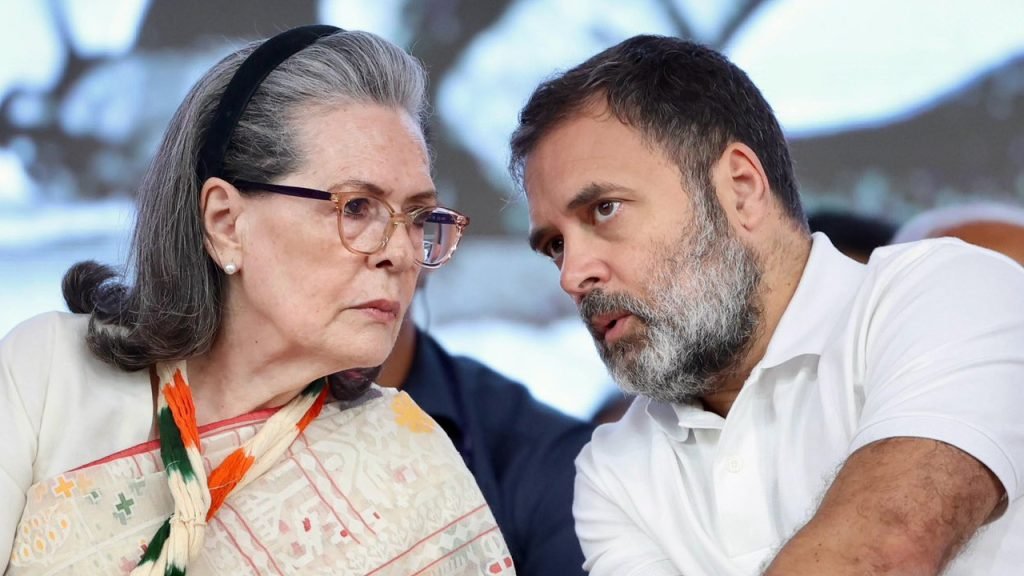
With an eye on improving its performance in several key states and preparing for a decisive contest against the BJP in the 2029 general elections, the Congress leadership is planning a significant organizational overhaul across the country. At the direction of Rahul Gandhi, the process has already begun in Karnataka. Following the elevation of D. K. Shivakumar to the Chief Minister’s post, he was relieved of his dual responsibility as state party president. Veteran Congress leader B. K. Hariprasad has now been entrusted with leading the Karnataka unit. Kerala is expected to be the next state in line for organizational changes. The current state president, Sunny Joseph, has joined the newly formed government led by V. D. Satheesan as a minister, prompting discussions about appointing a younger face to head the party organization in the state. Rahul Gandhi is believed to favor leadership changes in several states, including Delhi, Punjab, Assam, Tamil Nadu, Rajasthan, Bihar, Uttar Pradesh, Jharkhand, Kerala, and Jammu & Kashmir. In addition, there are reports that at least four state in-charges may also be replaced. Since B.K. Hariprasad has moved to Karnataka, the party is searching for a new in-charge for Haryana. Similarly, Ramesh Chennithala, who was overseeing Maharashtra affairs, has joined the Kerala cabinet, creating another vacancy. Tamil Nadu’s in-charge Girish has reportedly been assigned responsibilities in Goa, while Assam in-charge Jitendra Singh had already resigned after electoral setbacks in the state. There is also speculation about a possible change in Jammu & Kashmir, where state in-charge Syed Naseer Hussain, despite being considered close to Congress president Mallikarjun Kharge, may be replaced. The situation in Jammu & Kashmir has become particularly sensitive. State Congress president Tariq Hameed Karra is regarded as a personal choice of Rahul Gandhi, but his leadership has triggered significant unrest within the party. A faction led by former state president Vikar Rasool Wani has openly challenged his authority and even launched a “Delhi Chalo” campaign against him. Recognizing the seriousness of the dispute, the Congress high command has summoned both Karra and Wani to New Delhi. Senior party leaders hope to bring the two sides together next week and broker a reconciliation. Karra is also nearing the completion of two years in office. Before joining Congress, he was associated with the People’s Democratic Party led by Mehbooba Mufti. Many within the state Congress believe that this background has made it difficult for him to establish strong rapport with traditional party workers. That perception may ultimately become one of the key factors influencing his future within the organization.
KJ George Becomes the New Crisis Manager for the Gandhi Family
Tridib Raman
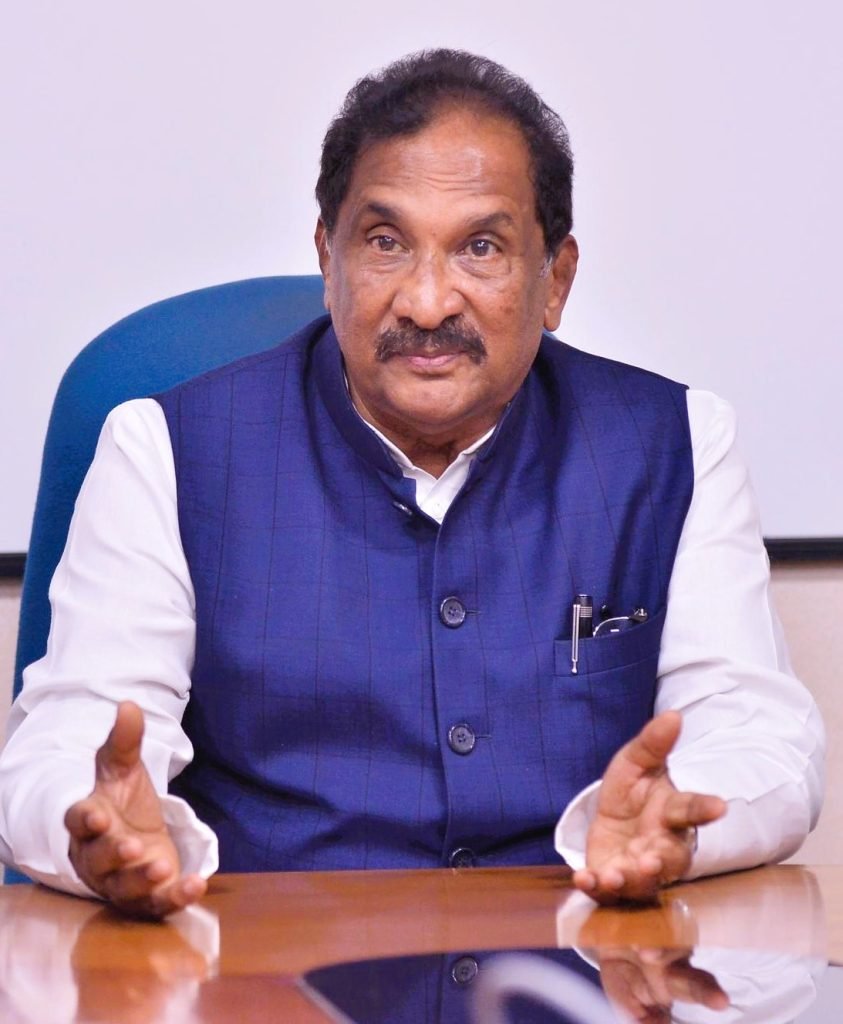
Although KJ George is not a very well-known face in Delhi’s Congress politics, this time he played the most significant role in successfully executing the leadership change in Karnataka. The power transfer from Siddaramaiah to DK Shivakumar may have appeared smooth from the outside, but it actually passed through complex and difficult political manoeuvres. Once the Gandhi family firmly decided to hand over the reins of Karnataka to DK Shivakumar, they entrusted the responsibility of preparing and convincing Siddaramaiah to six-time MLA and state minister KJ George, because George is also counted among Siddaramaiah’s most trusted aides. When the Congress high command asked Siddaramaiah to come to Delhi on 26 May, George also accompanied him. Although Rahul asked everyone, including KC Venugopal, to leave the room during the important one-on-one meeting with Siddaramaiah, George remained present with him. When Rahul suddenly asked Siddaramaiah to submit his resignation, Siddaramaiah was stunned. Later, George took Siddaramaiah to his house in Sunder Nagar, New Delhi, where the two leaders held a closed-door conversation for hours. George pacified Siddaramaiah’s anger and persuaded him to accept the party high command’s decision. George also spoke to Siddaramaiah-supporting MLAs who were floating the idea of forming a separate group under G. Parameshwara’s leadership. Once George prepared Siddaramaiah for an honourable exit, Siddaramaiah came to Delhi again on 28 May and submitted his resignation to the high command. After this, George brought Siddaramaiah’s son Yathindra to Delhi in his private jet and facilitated his meeting with Rahul Gandhi and Kharge. It is said that George himself arranged the breakfast meeting between Siddaramaiah and KC Venugopal. Political observers are now calling George the Gandhi family’s new Oscar Fernandes, someone who always remained ready to play the role of a crisis manager. At present, George has emerged as an important link between Karnataka Congress leaders and Delhi. It is possible that in the coming days the Gandhi family may expand his role further, as he is also highly trusted by Sonia Gandhi.
Why was the Chief Justice’s London visit in the headlines?
The six-day visit of the Chief Justice of India, Justice Surya Kant, to the United Kingdom unexpectedly became a focal point on social media. The Chief Justice was delivering a keynote lecture on Artificial Intelligence and International Law at Birkbeck College, University of London. The situation escalated during the question-and-answer session when a student asked a pointed question regarding the Chief Justice’s earlier “cockroach” remarks, linking the issue to freedom of expression and the voice of dissent. The organizers found this question so unpleasant and sharp that they immediately cut off the student’s microphone and warned that only questions related to AI could be asked. This caused a commotion in the auditorium; students began to walk out, and the clip went viral on social media. It is worth noting that the history of Birkbeck College, London, where this event was held, is profoundly revolutionary. Founded in 1823 by Dr. George Birkbeck, the college was established with the noble objective of providing quality and virtuous education to children from working-class and impoverished backgrounds. Notably, the elite class of that era had strongly opposed the establishment of this college. Most significantly, this institution opened its doors to women just seven years after its inception, decades before Oxford and Cambridge. Although the Indian High Commission in London reacted strongly to the entire incident, labeling it as “unseemly,” reliable sources suggest that the central government is somewhat upset about the matter. The government feels that it should be adequately informed about any such overseas programs attended by honorable judges, even if they are merely lectures, so that it can alert the relevant embassies or high commissions in those countries in advance. Moving forward, it will be the responsibility of Indian missions in relevant countries to properly reccie such events, gather necessary information, and only after being satisfied at their level, give the green light for judges to participate in such programs. The central government may hold discussions with the Chief Justice regarding this after he returns to the country following June 15.
Can Captain Change Teams Again?
Captain Amarinder Singh’s restlessness in the saffron camp is clearly visible. Speculation is rife about the former Punjab Chief Minister’s possible return to his original home. In recent days, Bhupinder Singh Hooda has stirred the pot by stating that Captain is in touch with the Congress. On one hand, Captain continues to oppose the appointment of Punjab BJP’s new chief Kewel Singh Dhillon, while on the other, he does not forget to reiterate that he has no intention of leaving the BJP. It is worth noting that Dhillon was in the Congress until before 4 June 2022 and had even won the 2012 Assembly election from Barnala on a Congress ticket. Some time ago, Captain created a stir by saying that not a single BJP leader called to express condolences on his brother’s death, whereas Rahul Gandhi personally phoned him to offer condolences. According to sources, a roadmap for Captain’s return to Congress had been prepared four-five months ago. However, before he could make his decision public, he received an ED notice and got entangled in it. The BJP knows that even if Captain stays in the party, he may not bring them much benefit. But if he returns to Congress, he could certainly improve Congress’s chances of victory. That is why the saffron party wants the investigative agencies’ swords to continue hanging over Captain’s head.
High Courts Short on Space for New Judges
Several pending appointments of judges in various High Courts have now received the green signal from the Supreme Court and the Central Government. As a result, High Courts in many states, including Bihar, are likely to get new judges in the coming months. However, both the High Courts and the state governments have raised their own practical difficulties regarding this development, which they have already brought to the attention of the Central Government and the Supreme Court. The High Courts’ main concern is the lack of adequate space; they do not have enough new chambers for the incoming judges. Each judge also comes with a staff of eight to ten people, for whom proper seating and working arrangements are necessary. State governments, on the other hand, are required to allot large bungalows to High Court judges. Since most of these official residences are already occupied, the question arises, where will they arrange new bungalows from?
