Tridib Raman
When, despite repeated assurances from the Gandhi family, senior Karnataka Congress leader and Deputy Chief Minister D. K. Shivakumar failed to secure the chief minister’s chair, signs of rebellion began to surface. The BJP, it appears, was waiting for precisely such an opening. Sources say, former Andhra Pradesh Chief Minister Y. S. Jagan Mohan Reddy was among the first to meet Shivakumar in Bengaluru. He reportedly conveyed that the Congress leadership was merely using him – citing, for instance, the substantial financial burden of the recent Bihar elections that allegedly fell on Shivakumar’s shoulders. Jagan himself is currently facing multiple legal cases, and observers suggest his political manoeuvres are partly aimed at maintaining leverage in Delhi and avoiding further legal jeopardy. Sources indicate that the task of political coordination was later entrusted to B. Y. Vijayendra, son of former Karnataka Chief Minister B. S. Yediyurappa and current Karnataka BJP chief. Notably, Shivakumar had earlier met Prime Minister Narendra Modi. Interestingly, during that meeting, the Prime Minister reportedly avoided political discussions altogether, instead inquiring about Shivakumar’s well-being, his family, and his children. By all accounts, it was a warm but informal interaction. Subsequently, DK is said to have met BJP’s national general secretary B L Santhosh, where a broader political roadmap was discussed. Soon after, he was summoned to Delhi for another high-level meeting with one of the BJP’s foremost strategists. According to sources, Shivakumar was told that the Prime Minister operates above day-to-day political bargaining and does not engage in petty politics. He was then reportedly offered a significant Union Cabinet portfolio if he were to join the BJP. Additionally, his brother D. K. Suresh was said to have been promised the Deputy Chief Minister’s post in a BJP-led state government. (Suresh had recently lost the Lok Sabha election from Bengaluru Rural.) It is understood that Shivakumar has sought time to consider the proposal.
Tightening the Reins on Social Media
Tridib Raman
A government that has, time and again, showcased its distinctive political craftsmanship on social media now appears fully conscious of the platform’s double-edged character. In recent days, as digital platforms have increasingly turned into arenas of pointed questioning and sharp scrutiny, even the most powerful have found the criticism difficult to digest. Consequently, with the clear intent of tightening its grip over online discourse, the Union government has introduced a significant amendment to the IT Rules. Social media companies will now be required to remove objectionable content within three hours (and in some cases two hours) of receiving official notice – a sharp reduction from the earlier 36-hour window. The new regulation is set to take effect in India from 20 February. With over a billion internet users in the country, this change poses a major compliance challenge for global technology firms such as Meta Platforms, X Corp, and Google. These companies argue that content removal typically follows a detailed review process, and that a two-to-three-hour compliance window is operationally impractical. They have previously raised concerns with the government regarding similar regulatory measures. Critics view the tighter timelines as a potential threat to free expression, warning that such directives may significantly expand government “takedown” powers. Amendments to the IT Rules 2021 have already resulted in thousands of content removal orders in the past. Several left-leaning media accounts have reportedly been blocked in recent months, and observers believe the frequency of such takedowns could rise further. Some experts caution that these stringent regulations may position India among the world’s most tightly controlled digital regimes, alongside countries such as North Korea, Iran, Russia, and China.
Victory in Assam Won’t Be Easy
Tridib Raman
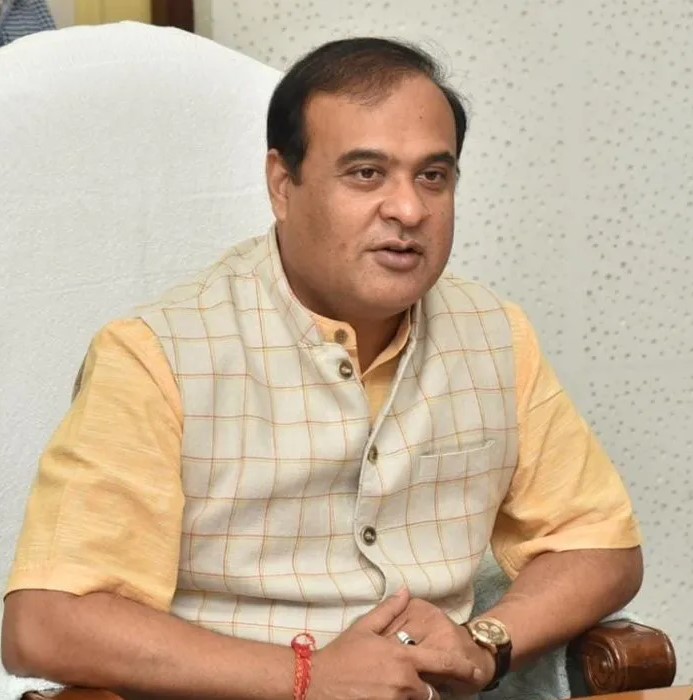
It appears that even the BJP’s top leadership has suddenly begun to feel that their outspoken chief minister, Himanta Biswa Sarma, may be crossing his ‘Lakshman Rekha’. So, when his post about “shooting” went wildly viral on social media, the BJP’s Chanakya took strong note of it. Himanta was told to stay within his limits and immediately remove the post. Along with this, he was sternly warned that he was needlessly pushing the party toward anti-incumbency, and that he was giving the state’s 35 percent Muslims an opportunity to unite and forcing them to vote en bloc for Congress. Therefore, Sarma was told that his stand should be anti-infiltration rather than anti-Muslim. It is understood that only after this did the Assam Chief Minister change his tone regarding Muslims and now target Bangladeshi infiltrators on and off occasion.
BJP’s Damage Control in Assam
Tridib Raman
The BJP’s top leadership has swung into action to manage emerging political damage in Assam. To begin with, during the Special Intensive Revision (SIR) of electoral rolls, the names of an estimated 7–8 percent Muslim voters were reportedly removed from the voter list. As a result, the community’s share in the electorate has now fallen to roughly 27–28 percent. Simultaneously, BJP strategists are said to have facilitated the formation of a sponsored network of Muslim clerics. One group each has been sent for propaganda in every geographical region of Assam. That is, one for Upper Assam (Brahmaputra Valley areas like Tinsukia, Dibrugarh, etc.), the second team deployed in Central Hill Region (Karbi Anglong, Dima Hasao, etc.), and the third team of mullahs-maulanas stationed in Barak Valley (Cachar, Karimganj, etc.). There are 8 such districts in Assam that can be called Muslim-dominated areas. Naturally, this team of community champions cannot directly raise slogans in favor of the saffron party, as it would not be acceptable to Muslims. So they have been told to work on the proper division of Muslim votes and to raise slogans in favor of the state’s third-largest political party, All India United Democratic Front (AIUDF). This party is led by 70-year-old Badruddin Ajmal, a major perfume businessman. In the 126-member Assam Legislative Assembly, Badruddin Ajmal’s party currently has 15 MLAs. Now, this group of clerics, heavily tinged with saffron political expectations, is appealing to Assam’s Muslims to “keep community-based politics alive at all costs.” They are reportedly urging voters to replicate in Assam what sections of Muslims did in Bihar and Maharashtra for Asaduddin Owaisi’s party, this time by consolidating behind Ajmal so that he may emerge as the principal voice of Muslims in the state. For the Indian National Congress, this BJP-sponsored campaign should indeed be a matter of serious concern.
Why the Rift between Tawde and Fadnavis?
Tridib Raman
BJP General Secretary Vinod Tawde is widely admired within the party’s top brass for his organizational skills. Perhaps that explains why, after his strong performance in the Bihar elections, he has now been entrusted with a major responsibility in the upcoming Kerala elections this time. Insiders also suggest that in Nitin Nabin’s new team, Tawde is likely to retain his position as national general secretary. Yet something appears amiss. Observers note a visible unease, a furrow on Tawde’s brow, and say he has felt sidelined in recent months. According to trusted party sources, ahead of the recent Maharashtra municipal elections, Tawde prepared a list of around 40 close associates whom he hoped to see fielded as party candidates in local bodies from Mumbai to Pune. When he took this list to New Delhi, he was reportedly told by the party leadership that the final decision on Maharashtra tickets rested with Devendra Fadnavis. Tawde was advised to submit the list to him in Mumbai. He did so. But when the candidates were announced, only one name from his list made it through.Tawde rushed back to Delhi, arguing that at least 15–16 of his recommended candidates were exceptionally strong, even “winnable” contenders. One, he pointed out, was a two-time victorious corporator from Pune whose ticket had also been denied.The central leadership distanced itself from the matter, reportedly saying it does not intervene in every local decision and that responsibilities, once assigned, should be discharged without external pressure. If Tawde had concerns, he should take them up directly with Fadnavis. He was also reminded of his own political trajectory, brought into the Legislative Council, elevated as national general secretary, and now even being considered for the Rajya Sabha. Undeterred, Tawde is said to have approached Fadnavis once more, only to be told that there was no personal bias in candidate selection. The tickets, he was assured, were allocated strictly on the basis of ground surveys, and those ranking highest in the assessments were chosen. At that point, there was little left for Tawde to say.
Dhaka’s New Power Shift
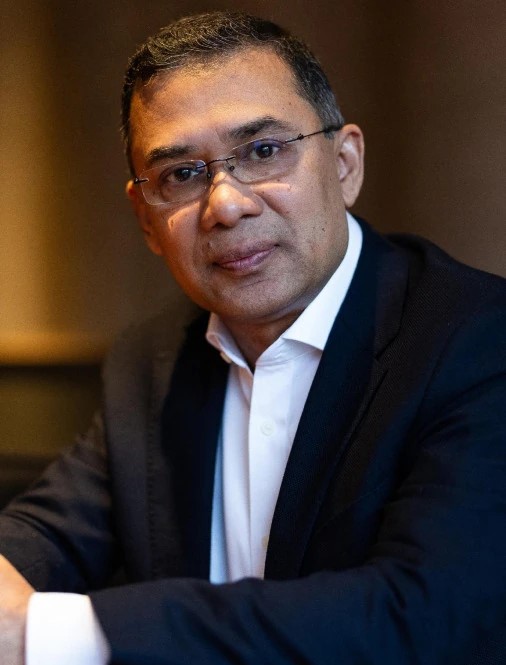
The sweeping victory of the Bangladesh Nationalist Party (BNP) in Bangladesh’s elections is likely to have caused concern in New Delhi. BNP leader Tarique Rahman is the son of Khaleda Zia, during whose tenure (2001–2006) India–Bangladesh relations experienced significant strain. At present, the most sensitive factor in evolving India–Bangladesh ties is former Prime Minister Sheikh Hasina. Tarique Rahman reportedly does not wish for Hasina to remain in India while issuing statements that could inflame tensions, which is why calls for her extradition are gaining momentum. India, meanwhile, is keen to continue key connectivity projects linking Assam, Meghalaya, and Tripura with Sylhet and Dhaka. A substantial portion of this infrastructure initiative is being executed by the Adani Group, with participation from Larsen & Toubro and Ircon International. Strategic connectivity, after all, often outlasts political turbulence.
