In 2025-2026, the US has witnessed a troubling and significant escalation in xenophobic, anti-India, and anti-Hindu attacks, which target Indian Americans. An exploration of what lies behind this anger
Ranjit Bhushan
Is the US dream, once the aspirational destination of hundreds of millions of Indians, fading away? Perhaps not yet, but the writing, which appears on the wall, is rather ominous.
For decades, the Indian diaspora in the US was known as a ‘model minority’ – a community celebrated for its high educational attainment, entrepreneurial success, and seamless integration into the American way of life.
Success Does Not Guarantee Acceptance
Since the 1960s, Indian skilled white-collar executives have risen to prominent corner offices across the United States driven by strong STEM foundations, English proficiency, and high adaptability in complex environments. Their leadership ascendancy spans tech giants and Fortune 500 boardrooms, backed by decades of immigration pipelines like the H-1B programme.
Apart from the super-skilled highflyers, common Indian immigrants form part of this great Indian dream; between them, Indians constitute the second largest foreign-born group in the United States, numbering about 3.2 million as of 2024, says the Migration Policy Institute, an independent, nonpartisan, nonprofit think tank based in Washington D.C.
Suddenly, this shining narrative has changed – for the worse. In the recent past, the US is witnessing a troubling and significant escalation in xenophobic, anti-India, and anti-Hindu attacks targeting Indian Americans.
From Everyday Slurs to Violent Attacks
Data offered by the Federal Bureau of Investigation (FBI) and community watchdogs, say that hate crimes targeting individuals of South Asian and Hindu heritage have steadily climbed, prompting deep concern about the safety, acceptance, and the once-rosy future of Indians in America.
A report by the Centre for the Study of Organised Hate (CSOH) found the monthly volume of hateful posts about South Asians on X more than tripled between January 2024 and June 2026.
The rising tide of anti-India and racist attacks serves as a stark reminder – if any reminder is needed – that economic prosperity is no guarantee against bigotry. Anti-Indian and anti-Hindu sentiment manifests across a spectrum that ranges from casual, petty aggressions to severe physical violence and vandalism. Indian Americans have increasingly found themselves targeted in public spaces.
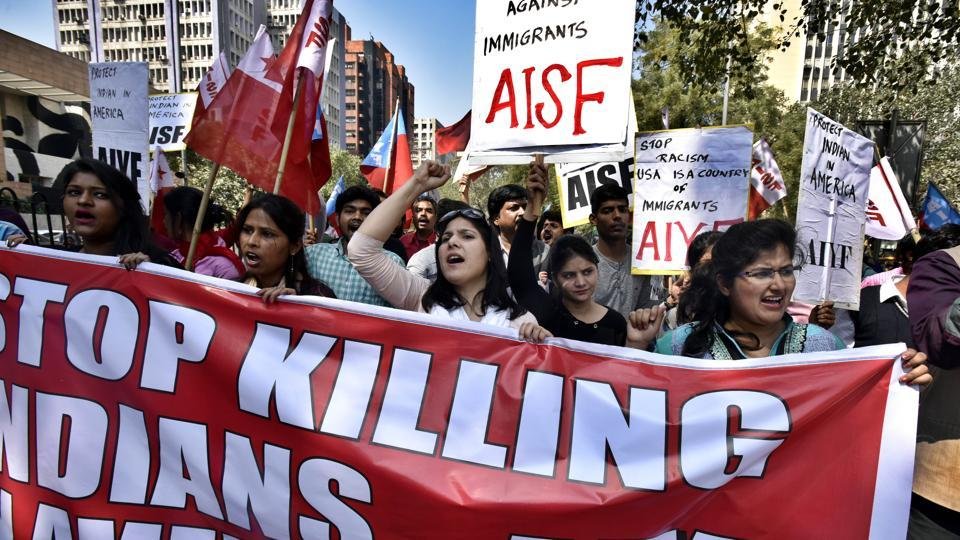
Now, consider this:
*In everyday incidents documented across major metropolitan areas, individuals have been accosted with demands to “go back to your country” or accused of “taking American jobs.” High-profile assaults, such as the targeting of Indian American tech workers or students, have underscored growing vulnerability.
*Temples across the US, from California to New York, have increasingly become targets for hate crimes. Anti-Hindu vandalism frequently involves the defacement of temple walls with derogatory slurs, political graffiti, and threatening messages. Such attacks are little more than just physical damages; they violate the psychological safety of families seeking to practice their faith in peace. In a recent case, police in the state of Illinois thwarted a potential mass shooting and arrested Alexandros Paporakis, a Taco Bell cashier from the Chicago suburb of Palatine. This 19-year-old American, who expressed white supremacist views, told prosecutors that he “couldn’t wait” to kill Indian people.
September 2026 witnessed violent stabbing of a Punjabi Sikh driver in Wyoming. Lawmakers and diaspora groups have tracked multiple instances of temples vandalized with anti-Hindu graffiti or targeted with gunfire across states like Utah, California, and New York, alongside data from India’s Ministry of External Affairs showing an overall rise in reported incidents abroad in 2025 and 2026.
Over two nights in late June 2025, an estimated 20 to 30 rounds were fired at a Krishna temple in Spanish Fork, Utah, while people were inside. No one was hurt. Two months later, Illinois Congressman Raja Krishnamoorthi condemned a break-in and vandalism at a Hindu temple in Santa Clara, California, saying incidents targeting Hindu temples across the US “are on the rise”.
Immigration Politics and the New Nativism
Much of the hostility seems to have been driven by fights over immigration. President Donald Trump campaigned on the issue of immigration in the lead-up to the presidential election of 2024, and has launched sweeping restrictions, including “military-style” federal raids on immigrant communities, resulting in the deaths of some activists – since returning to the White House in January 2025.
It would be no exaggeration to suggest that this anti-Indian campaign has been led by the American President himself, who in 2025 criticised US technology companies for outsourcing jobs to India. That September, he imposed a USD 100,000 fee for certain new H-1B petitions. US courts are still deliberating on its legality and have currently blocked the payment requirement.
Figures close to Trump have also displayed patently hostile anti-Indian attitudes. In September 2024, far-right activist Laura Loomer, once a close Trump ally, wrote that the White House would “smell like curry” if former Vice President Kamala Harris won the presidency. Incumbent Vice President JD Vance – whose wife, ironically, is the daughter of Indian immigrants – has used the “dog whistle”, calling H-1B visa holders, a vast majority of them Indians, “indentured servants”.
Indians receive more than 70% of H-1B visas, which US employers use to bring skilled foreign workers to the country. Spikes in online hate have followed political rows over the programme.
Social Media, Cultural Anxiety and the Politics of Identity
Despite the American hip-hop love for India – the likes of Bob Dylan, beat generation virtuosos like Timothy Leary and potential geeks like Steve Jobs drawn to Indian philosophy with the Himalaya as the backdrop of their meditation in the heyday of the hippy movement – religious literacy regarding Eastern faiths, such as Hinduism, Buddhism, and Jainism, remains low, often shaped by romantic tropes, media flattening, and a heavy cultural focus on Judeo-Christian norms. American public life and educational systems historically centre on Christian literacy, leaving academic curricula with sparse or superficial introductions to Eastern worldview.
Wrote a former Indian ambassador, Ashok Sajjanhar, in a column: “The immense professional success of Indian Americans has, ironically, fuelled a modern wave of nativist resentment. With Indian-born executives leading some of the world’s most powerful tech conglomerates and occupying prominent roles in medicine and finance, a hostile counter narrative has emerged. During times of domestic economic instability, corporate layoffs, or housing crunches, the diaspora is frequently scapegoated by individuals who view immigrant success as a zero-sum loss for native-born citizens.’’
Some independent platforms have suggested that when cultural practices become highly visible without simultaneous, proactive community dialogue, friction can manifest among segments of the host population, explains Sajjanhar.
The internet has emerged as a major incubator for anti-Indian and anti-Hindu rhetoric. Social media platforms witness a heavy volume of coordinated trolling, where users employ derogatory tropes regarding Indian hygiene, accents, and corporate leadership.
As the vibrant Indian American population moves outside traditional metropolitan hubs into suburban enclaves, cultural visibility has grown. Public celebrations of festivals like Diwali or the construction of traditional architecture for temples have sometimes triggered xenophobic reactions from local communities, not used to this `non-Christian’ change in demographics.
With the President at the vanguard of such a disruption, government agencies have followed suit. In September, a since-deleted Department of Homeland Security post featured a Sikh man identified as “Mr Singh”, asking him to “get off our roads”. The post came amid a Trump administration campaign to highlight the presence of undocumented immigrants in commercial trucking, particularly Sikhs and Indians.
While immigration is a big issue, it is by no means the only one. Anti-South Asian hostility in the US has surged sharply amid rising political visibility, immigration debates, and high-profile leadership roles. Reports from civil rights groups and research organizations point to a dramatic increase in online hate speech, targeted slurs, and offline harassment.
The rise of South Asian figures in mainstream American politics, such as former Vice President Kamala Harris, Vivek Ramaswamy, Usha Vance and New York Mayor Zohran Mamdani, has heightened public focus on the community. Such political ascent has given way to the “Great Replacement” conspiracy theory, which claims white populations are being deliberately replaced.
Need for a Collective Response
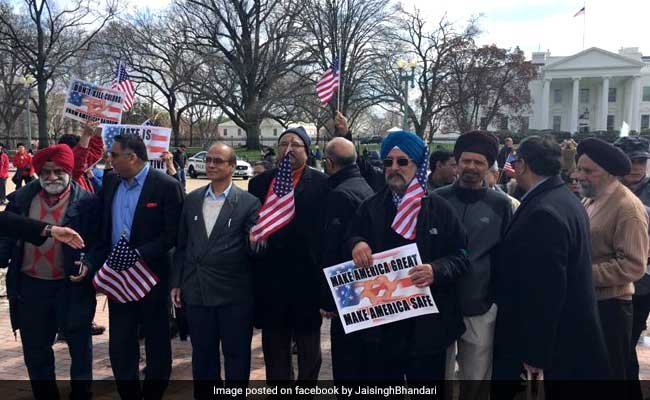
Containing anti-Indian sentiment in the United States requires a combination of robust legal enforcement, corporate accountability on social media platforms, community-led documentation, and constructive policy dialogue around immigration and economic anxieties. While US officials like Secretary of State Marco Rubio have stated that such sentiment is not deep or widespread across the broader population, they acknowledge that targeted acts of hate and ignorance persist.
Federal and local law enforcement must rigorously investigate and prosecute threats, vandalism, and plots targeting cultural or religious sites, such as the recent threat against a Hindu temple near Chicago. Political and civic leaders across the spectrum must consistently and explicitly reject anti-immigrant and racist rhetoric, ensuring that mainstream political discourse does not cross into dehumanization or ethnic stereotyping.
Given the tensions over immigration, ratcheted at the highest levels in the US, transparent immigration reform must be considered mandatory. Addressing economic and visa debates – such as H-1B skilled worker programmes – with clear, fact-based policy rather than inflammatory scapegoating can help reduce underlying economic resentments.
Typically, it must be a two-way process. While the Indian community in the US boasts of a high voter turnout, it historically under-participates in local grassroots advocacy, school boards, and city councils. Moreover, isolating the community’s struggles from broader civil rights narratives limits the effectiveness of advocacy. Indian American organisations need to build active coalitions with other minority groups, including Asian American, Black, Hispanic, and Jewish advocacy groups.
It is no surprise, therefore, that many Indians are looking at January 20, 2029, because that is the day a new American president will be sworn in. To be sure, that is no guarantee that the White supremacists will stop pulling their punches, now that the genie has been let out of the bottle.