Tridib Raman
For the past decade and a half, the Bharatiya Janata Party has been attempting to reshape the face of Indian politics. Watching an opposition repeatedly falter before its political theatrics is nothing new. However, the manner in which the Constitutional Amendment Bill related to women’s reservation suffered a crushing defeat by a margin of 54 votes on Thursday has sparked a new debate within political circles, especially over the timing of introducing it during a specially convened session of the Lok Sabha. “They say the one who wins after losing is a true Baazigar.” While the Leader of the Opposition, Rahul Gandhi, repeatedly referred to this political bazzigar as a magician in his speech, the ruling side was fully aware that even if the bill stalled in Parliament, it would succeed in sending a strong message to women across the country. As soon as the bill fell, the BJP instructed its cadre to organize protests nationwide, led by its women leaders and workers, to project opposition parties as fundamentally anti-women. At the same time, it is equally true that since coming to power in Delhi in 2014, the government led by Narendra Modi has faced such a significant defeat on a bill in Parliament for the first time. On the other hand, until April 16, BJP strategists were reportedly in continuous contact with 50–55 opposition MPs, confident that many would remain absent on the day of voting. But this time, the opposition was unusually vigilant. Major parties like the Samajwadi Party, Trinamool Congress, and Indian National Congress closely monitored their MPs, keeping track of their every move. Even before voting on the Women’s Reservation Amendment Bill, the Delimitation Amendment Bill, and the Union Territories Law Amendment Bill, the government’s crisis managers had realized they would not be able to secure the required numbers. Much of their confidence had rested on Akhilesh Yadav potentially influencing outcomes at the last moment. Despite knowing it lacked the necessary two-thirds majority, Prime Minister Modi gave the go-ahead for voting on the women’s bill, possibly to shift the blame for its failure onto the opposition and convert it into a political weapon ahead of elections. Leveraging its extensive propaganda machinery, the BJP now appears determined to position itself as pro-women while branding the opposition as anti-women. It is worth noting that this is the first Constitution Amendment Bill to have fallen in Parliament since 2012.
Supreme Court Needs Women Judges
Tridib Raman
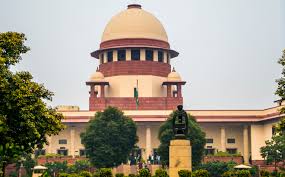
On one hand, the country’s apex court, the Supreme Court, is awaiting its first woman Chief Justice of India, Justice B.V. Nagarathna, in September 2027. It is being hoped that, on the basis of seniority, she will hold this important position, even if only for just 36 days, in September 2027. However, Justice Nagarathna herself has expressed concern over the absence of women judges in the Supreme Court, as she is currently the only woman judge there. After the retirement of Justice Bela M. Trivedi, this vacuum has become even larger and more glaring. Chief Justice of India Justice Suryakant is also said to be in favour of ensuring the presence of women judges in the country’s Supreme Court. At present, two posts of judges are vacant in the Supreme Court. Efforts have begun to fill at least one of these vacancies with a woman judge. Currently, three names are under consideration for this, the first of which is that of Gujarat High Court’s current Chief Justice, Sunita Agarwal. Her name is leading in terms of seniority. The second name is that of Andhra Pradesh High Court Chief Justice Lisa Gill, who took charge of this important responsibility only last month after moving from the Punjab and Haryana High Court. It is said that her name also has the approval of Justice Suryakant. Moreover, assembly elections are due in Punjab next year. Since Justice Lisa Gill is a Jat Sikh, the ruling party at the Centre could potentially gain some electoral benefit from this. The third name is that of Karnataka High Court Chief Justice Anu Sivaraman. It may be recalled that when former CJI Sanjiv Khanna had constituted an inquiry committee to investigate the “note case” related to Justice Yashwant Varma’s residence, Justice Anu Sivaraman was also part of that panel of judges.
Exercise to Fill Judges’ Vacancies
Tridib Raman
Chief Justice of India Justice Suryakant appears somewhat serious about filling the vacant positions of judges in various courts across the country. The CJI wants faster action in filling these vacant posts. Understanding the CJI’s sentiments, the Collegium has recommended 11 names for the Jammu & Kashmir High Court. Out of these, 10 names have been sent from the Bar quota (advocates), while only one name is from the Bench quota (judicial officers). Currently, the Jammu & Kashmir High Court has 13 judges, whereas its total sanctioned strength is 25. That means 12 posts are still lying vacant.
Nitish for Nishant
Those busy predicting the political decline of Nitish Kumar may be in for a surprise in the coming days. In fact, Nitish played a significant role in positioning Samrat Choudhary as his successor. His intent was to preserve the importance of the “Lav-Kush” social coalition in Bihar even after stepping down as Chief Minister, referring to the Kurmi-Koeri alliance, which accounts for roughly 15% of the state’s population. Otherwise, the Rashtriya Swayamsevak Sangh (RSS) and even Prime Minister Narendra Modi were said to prefer Nityanand Rai. But Nitish was not inclined to see “the throne of Bihar pass into the hands of a Yadav leader” after him. Strategically, he pushed Samrat’s name forward who also enjoys the backing of Union Home Minister Amit Shah. Nitish’s immediate priority, however, is to clear any controversies surrounding his son Nishant. It is said that Nishant himself chaired the recent core committee meeting of the JDU at the party office. Sources suggest that in the coming days, Nishant could replace Sanjay Jha as the party’s national working president. Once groomed in this role, Nitish may push for his son to be made Bihar’s Chief Minister for a year. The Bharatiya Janata Party would likely have to consider this demand sympathetically, as Nitish would not hesitate to point out that his party still holds 85 MLAs in the current Assembly. As for his two trusted lieutenants, Rajiv Ranjan Singh (Lallan Singh) and Sanjay Jha, Nitish has already curtailed their influence by ensuring Vijendra Yadav and Vijay Kumar Chaudhary became deputy chief ministers under Samrat.
Will Bihar End Its Liquor Ban?
According to highly reliable sources, the ban on liquor (prohibition) in Bihar is set to be lifted very soon. Sources further reveal that Bihar’s new Chief Minister, Samrat Choudhary, may take a decision to scrap the liquor ban in his very first cabinet meeting in May. Two main reasons are being cited. First, despite prohibition, alcohol remains widely available in the black market across the state. Second, the policy has caused significant revenue losses for the government, while benefiting local mafias and elements within the police and administration. Recently, data from Bihar’s revenue department revealed that after prohibition was implemented, nearly 70% of newly registered land purchases were made by police personnel, suggesting that, in many ways, the police have emerged as major beneficiaries of the policy. At the same time, the state has witnessed a sharp decline in revenue collection, impacting various development schemes. It is believed that New Delhi has also advised the new Chief Minister to boost state revenues and explore new income sources. In this context, lifting prohibition could bring substantial funds into the state exchequer.
Who Is This Minister?
This minister in the Modi government comes from a coalition quota and has largely maintained a low profile. However, it is believed that in recent times, he has amassed considerable wealth. Attention from the Prime Minister’s Office reportedly turned toward him after it emerged that his son had recently acquired a fleet of cars worth ₹12 crore, including luxury vehicles like Land Rover and other high-end imports. It is also said that an official from the Department of Health Research is closely associated with the minister, allegedly facilitating various deals, whether related to increasing seats in medical or Ayurvedic colleges or other matters. Sources indicate that the top leadership is now preparing to issue an ultimatum to the minister.
In an Age of Noise, a Politician Who Writes
In politics, there are still a few people left who read and write. Otherwise, in this new era of politics, it is the “thumb-impression” (illiterate) politicians who are having a field day. You must remember Dr. Veerappa Moily, who served as Law Minister for a long time during the Congress regime. Just a few days ago, his 50th book as an author, ‘Bharatiya Nyaya Shastra: Reflections on Indian Jurisprudence & Perspective for Posterity’, has hit the market. The book delves deep into the fundamental ethos and spirit of Indian jurisprudence. Recently, the book was launched at O.P. Jindal Global University. Interestingly, the foreword of this book has been written by former Chief Justice of India, Dr. M.N. Venkatachaliah. What is remarkable is that despite being a full-time politician, Moily still manages to find time to write books running into thousands of pages. One can only hope that with the passage of time, this breed of scholarly politicians does not become a thing of the past.
