Tridib Raman
The Indian Foreign Minister dismissed the entire mediation exercise by simply calling it ‘brokerage’ and washed his hands of it. A country like Pakistan has taken it upon itself to turn this disaster into an opportunity. However, Pakistan will also have to understand that in crafting international strategy, perception is often more important than intentions. So, it will not be at all easy for Pakistan to convince its Muslim countries that despite its neutral stance, why does it still smell of ‘Americanism’? Recently, the UAE suddenly demanded back the 3.5 billion USD loan it had given to Pakistan. This amount is not small; it constitutes approximately 21 percent of Pakistan’s total foreign reserves. Experts also believe that the UAE’s sudden step was taken only after Pakistan displayed its neutral stance. In such relationships, mere diplomatic balancing is not considered sufficient. Pakistan’s this mediation initiative is also said to have internal support from China. From the American side, to participate in this two-day talk, US President Trump has sent his Deputy JD Vance, his special envoy Steve Witkoff, and his son-in-law Jared Kushner to Islamabad. On the other hand, from Iran’s side, participating in this talk are Iranian Foreign Minister Abbas Araghchi and the Speaker of the Iranian Parliament Mohammad Bagher Ghalibaf. Pakistan is viewing this entire peace talk exercise as a big opportunity for itself. Pakistan wants that if it succeeds in ending the America-Iran war, then it can do a new ‘rebranding’ of itself as a major player in the Middle East. By taking credit for bringing the peace talks to a conclusion, it can secure new defense deals with Gulf countries to give a new lease of life to its weak economy. It can encourage them to make maximum investments in its country. Pakistan also hopes that a prosperous country like America and some rich Gulf countries can fund them for military expansion as well. Meanwhile, rich Gulf countries, Turkey, and America can also invest in the energy sector there and provide them with economic assistance packages. But on one hand, Pakistan wants to become an important part of the Muslim countries, while on the other, it also wants to remain an equal partner with Western countries. Maintaining this diplomatic balance will be its biggest challenge. One of the most important things is that Pakistan shares a border with Iran, so even a small mistake in mediation can become a big disaster for it. Therefore, in no situation can it afford to take the risk of displeasing Iran, nor America. For Pakistan, this is almost like riding two boats at the same time; if it slips even a little, sinking is certain.
Abdullah Family Turns Away from Congress
Tridib Raman
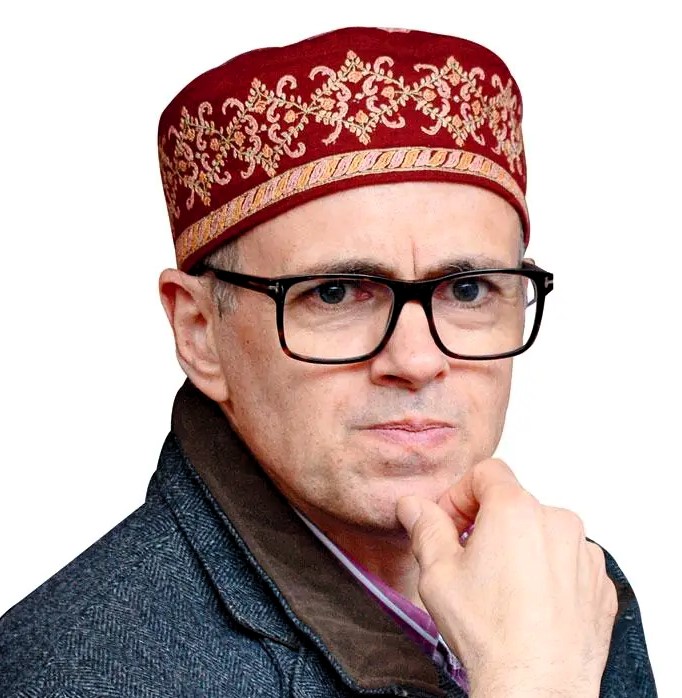
In politics, it is often said, “once the purpose is served, recognition fades.” In the race to win the Jammu and Kashmir Assembly elections this time, Omar Abdullah of the Jammu & Kashmir National Conference was frequently seen seeking the support of Rahul Gandhi. Today, however, the Abdullah family appears adept at quietly aligning its tone with the saffron camp. Omar now travels to Delhi to meet Union Home Minister Amit Shah directly, returning to Srinagar with assurances for a smooth tenure in the state. Ideally, the Indian National Congress should be a genuine power-sharing partner in the state, but the father-son duo of Farooq Abdullah and Omar Abdullah appears to pay little heed even to the party’s modest demands. Nearly two years have passed since the NC–Congress alliance government took office, yet it does not seem that the Abdullah duo consults Congress even on significant governance matters. Meanwhile, a direct confrontation has emerged between Lieutenant Governor Manoj Sinha and Chief Minister Omar Abdullah, delaying key appointments such as that of the Advocate General. Although appointments for Additional and Deputy Advocate Generals, along with a team of law officers, were recently cleared, it is striking that Congress failed to secure even a single slot. The state Congress chief Tariq Hameed Karra, considered a personal choice of Rahul Gandhi, had recommended several names, but his suggestions were reportedly brushed aside without consideration. In effect, Congress has been unable to appoint even one law officer in the state. Karra, for his part, is seen more frequently in Jammu than in Srinagar. Congress still retains pockets of influence in Jammu, and if he manages to safeguard even these, it would be no small achievement.
Could Raghav Chadha Launch His Own Party?
Tridib Raman
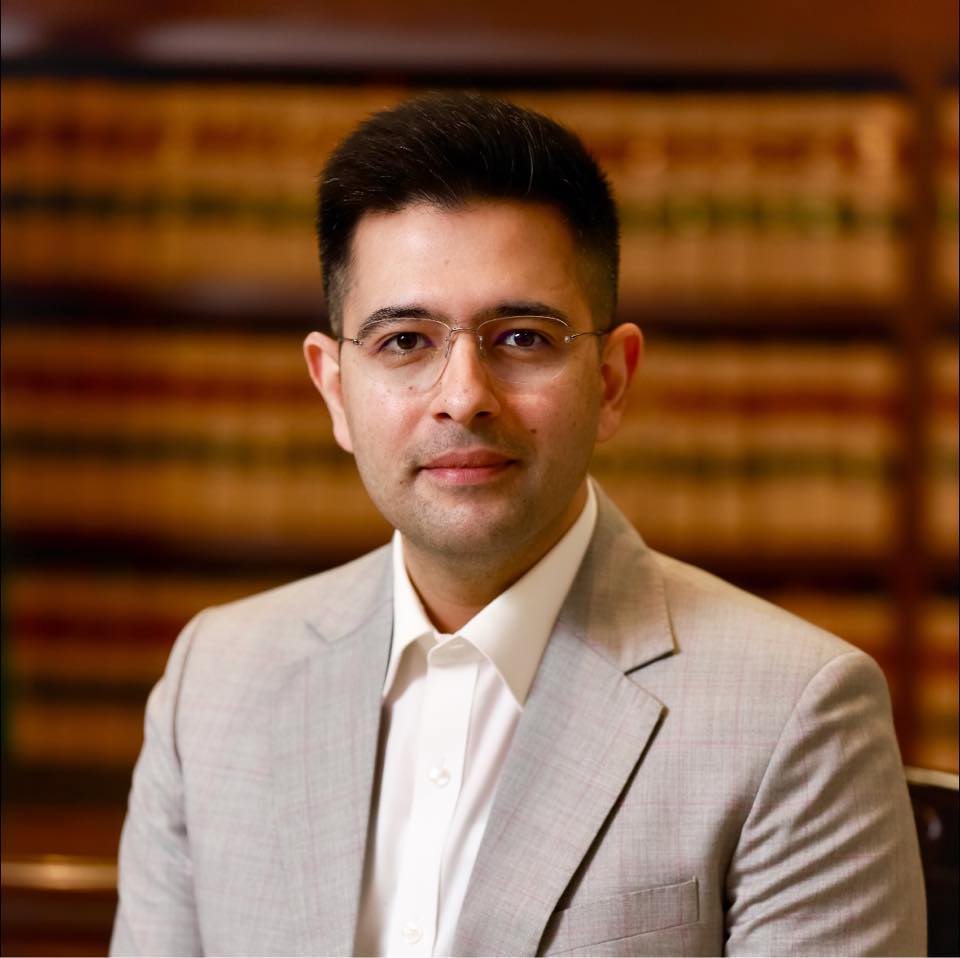
After adopting a rebellious stance against the Aam Aadmi Party (AAP), party leader Raghav Chadha appears to have entered a new, aggressive phase. This persona is resonating strongly with the younger, next-generation audience. As Chadha himself puts it, “I am wounded, and that is why I am so dangerous.” Sources close to him reveal that his rising popularity on social and digital media has left him highly encouraged. In a bid to consolidate support among Gen Z and young voters, he may announce the formation of a new political party. This proposed outfit is expected to seek a significant role in the upcoming Punjab elections. The example of Humayun Kabir in West Bengal suggests that the BJP has, in the past, generously supported the growth of such emerging political formations in poll-bound states. Consequently, Chadha may not face major financial constraints in this regard. However, a section of his advisors is reportedly urging him to avoid the complications of forming a new party and instead consider joining the Bharatiya Janata Party directly, where his future could be more secure. In the forthcoming Punjab Assembly elections, he could emerge as a trump card for the BJP and potentially engineer a major split within AAP ahead of the polls. AAP leaders, too, appear aware of Chadha’s intentions. The party has tasked senior figures like Sanjay Singh, Atishi, Saurabh Bharadwaj, and Bhagwant Mann with countering him on public platforms and social media. Arvind Kejriwal, who once considered Chadha among his closest confidants, is said to be particularly upset. When both he and Manish Sisodia were released from jail, Chadha neither visited them nor issued any statement in their support. In Parliament, Chadha had been assigned the responsibility of raising two key issues: the arrest of over 150 AAP leaders and workers in Gujarat, and the suspension of central assistance to Punjab. However, instead of raising these matters in the Upper House, he was often seen spending time in the offices of Piyush Goyal and Kiren Rijiju within the Parliament complex. After his release from jail, Kejriwal publicly thanked several senior AAP leaders but notably did not mention Chadha. It had already become evident to many that Chadha had adopted a distinctly rebellious posture.
Who Benefits from Big Increase in Vote Percentage
Tridib Raman
On April 10, an unexpected increase in voter turnout was recorded in the polling percentages of Assam, Kerala, and Puducherry. After the completion of the Election Commission’s SIR i.e. Special Intensive Revision elections were held in Bihar, along with Kerala, Assam, and one Union Territory, Puducherry. It should be noted that in Bihar too, after the polling completed following SIR, the vote percentage had increased by almost 10 percent. Naturally, the benefit of this went to the ruling alliance of the state, i.e., JD(U)-BJP. In Kerala, the previous turnout of 75 percent increased to 78 percent this time, in Assam it went from 82 to 85 percent, and in Puducherry from 85 to 90 percent. In Puducherry, clear tension was visible in the Congress-DMK-VCK alliance. Congress took 16 seats for itself and left 1 seat for VCK, while last time Congress contested on 14 seats and could win only 2 seats. In Kerala, the Left Front has been in power for the last 10 years continuously. Last time, the Muslim community gave united votes to the Leftists. This time, the way Chief Minister Pinarayi Vijayan has made efforts to woo Hindu voters, it seems that the Muslim vote has united and gone into Congress’s fold. In Assam this time, Congress has put in full effort in Upper Assam under the leadership of Gaurav Gogoi. Congress is confident that the 10 percent Ahom vote share there has fallen into its lap. On the other hand, BJP strategists are ecstatic that in Assam, where earlier there were 39 Assembly seats where Muslim voters were decisive, this time after SIR, the number of such seats with Muslim dominance has reduced to just 22. Meanwhile, on the 12 seats of Bodoland, there is a direct contest between BPF i.e. ‘Bodoland People’s Front’ and UPPL i.e. ‘Pramod Boro’s United People’s Front Liberal’. While BPF has an electoral understanding with BJP, Pramod Boro is also said to be in direct contact with Himanta Biswa Sarma. That is, UPPL can also support BJP after the elections. In Upper Assam too, there are more tea garden votes than Ahom voters. These are considered to be BJP-supported votes. Moreover, BJP’s election budget in the entire Assam is being considered five times that of Congress’s election budget. In a way, Congress was fighting the election in Assam with limited resources. In this election, one more signal has been received that there has been a big jump in the voting percentage of women voters. Both Mamata in Bengal and Stalin in Tamil Nadu want to catch this trend. Mamata has already initiated many schemes keeping the women of the state at the center. On the other hand, Stalin has also worked on the lines of Bihar to lure women voters by giving free coupons worth 8 thousand rupees to the head of every family. This coupon is a kind of cash with which the family can buy necessary household items like fridge, TV, mixer, etc. That is, every party has accepted that women voters prove to be the most decisive in elections.
Why No Trust in Biswa
The BJP top brass still has full hope that there will be a return of BJP in Assam once again. Even if BJP’s own seats may decrease a bit, it has complete confidence in forming the government again with the strength of its allied parties. But trusted sources associated with the party claim that ‘if BJP government comes again in Assam this time, there may be a change in leadership in the state. Someone else may be made CM in place of Himanta Biswa Sarma.’ In recent days, Himanta remained embroiled in controversies regarding his wife and brother. The aggressive manner in which he defended the allegations against him did not go down well with the BJP top brass. Sources also say that PM Modi himself is maintaining a distance from him. In the public meetings or road shows that PM held in Assam, Himanta was deliberately kept away from him. Does this mean that the PM himself did not want to share a stage with him?
Balancing Power and Faith
Although the Chief Minister of this BJP-ruled state, which borders Delhi, may currently be managing to hold on to his position, his supporters within the party have not yet laid down their arms. According to sources, this time it is only because of PM Modi that this saffron CM has received protection and has also been given permission to expand his cabinet. It is believed that to keep a tight rein on his perennial opponents, the Chief Minister takes as much help from pujas, rituals, and tantric exercises. Sources say that every day, pujas, prayers, and rituals are being performed for him in more than 50 temples, the daily expense of which itself runs into lakhs.