Tridib Raman
For some time his health had been a little fragile. He was under close supervision of doctors at AIIMS, resting at home. Medicines and prayers together seemed to work; a steady improvement was visible. Just a day before he left this mortal body, he had casually mentioned over the phone, “I’m getting better now, and from the 10th of December the doctors have said most of my medicines can be stopped.” But who could have imagined that he would leave everything behind and depart from this world on 4 December? In his recovery phase he had promised to meet several friends in the coming days. Breaking a promise was never part of his nature, but this time something unimaginable happened. The India International Centre on Lodhi Road, New Delhi, was among his favourite places. One could often spot him at the restaurant on the third floor of the Annexe, having a vegetarian thali or idli-vada during lunchtime. His circle of friends was long: his old socialist comrades, a few celebrated journalists from another era, some judges, lawyers, and a handful of companions from the days of earlier struggles. To be honest, this list was just as eclectic as his political commitment.
From his school days itself, that is from the age of 14-15, he had associated with George Fernandes. His socialism shone a bit more brightly during college politics. He was a fan of Lohia. However, his late wife Sushma Swaraj was raised on the ideals promoted by the RSS, their daughter Bansuri Swaraj is today a BJP MP from New Delhi. Despite this, he had kept his socialist thinking intact in a corner of his heart. In earlier days when he drove his white Maruti Zen himself; later, he travelled in his chauffeur-less black Mercedes. But neither his behaviour, nor his circle of friends, nor even his attire changed because of it. He enjoyed having coffee at the Belvedere Club of Delhi’s Oberoi Hotel, and in the same breath would drive himself to the famous pakoda stall in Nauroji Nagar to relish their mixed pakodas. He also loved eating aloo-tikki and bhalla-papdi from the chaat vendor in the back lane of the UPSC building on Shahjahan Road, sitting right inside his car. For almost three decades, 8 Safdarjung Lane in New Delhi, an elegant Lutyens-zone bungalow with a sprawling lawn, was his home. In 2019, when Sushma Swaraj declined to contest the Lok Sabha elections due to health issues, and barely fifteen days after the BJP formed the government again, the Swaraj couple vacated their official residence and shifted to a small flat in the Dhawandeep Building on Jantar Mantar Road. Even in those changed circumstances, Swaraj Kaushal adapted himself very quickly to those new circumstances as well. He had a deep interest in literature and history, and was well-versed in Punjabi literature too.
He was an ardent admirer of Dinkar and Jaishankar Prasad, and a huge fan of Punjabi poet-singer Asa Singh Mastana. Biographies were his greatest love. Whenever a new biography arrived at Khan Market, his feet would automatically carry him towards Bahrisons. One could talk to him for hours about Hindi cinema and old songs. Pakeezah and Ijazat were among his all-time favourite films. For a while, he even published an English newspaper titled Memoir. His command of English was equally strong. He was considered a specialist in matters of insurgency, particularly in Northeast politics. Laldenga was an old friend, and Swaraj Kaushal was regarded as the chief architect of the Mizo peace accord. Later he was appointed Governor of Mizoram. He shared a warm rapport with Chaudhary Bansi Lal, who had sent him to the Rajya Sabha. On the strength of his capability, he earned the designation of Senior Advocate in the Supreme Court at a very young age. He possessed an amazing treasure of political anecdotes and, most importantly, his style of storytelling was equally unique. One unfulfilled desire remained: he wanted a feature film to be made on his wife’s life. Meanwhile, he was also considering writing a book, so these days he was reading more and more about literature, culture, and history on his iPad; perhaps he had conceived the outline of this new book around these very subjects. He still had many unresolved journeys to undertake, he wanted to see his daughter take even greater political strides, and he wanted to show how extraordinary goals can be achieved while living an entirely ordinary life. But life has its own plans for everyone. When, what, and how, on these decisions it allows no interference. With the passing of Swaraj Kaushal, a vast treasure of unspoken stories has departed with him.
Now, Discussion Centers on Rajnath’s Name
Tridib Raman
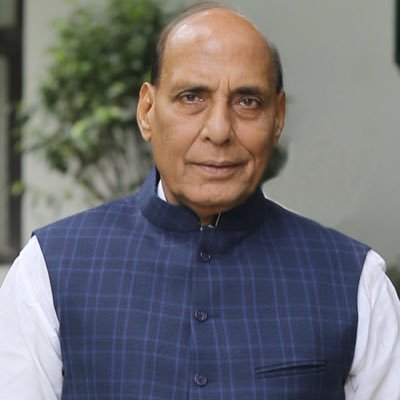
In the rush to announce its new president immediately, the BJP seems to have landed on a new name, and that name is Central Defence Minister Rajnath Singh. According to sources, the RSS top brass has pulled Rajnath’s name out of its hat. The RSS’s thinking is that compared to other names in the BJP presidential race, Rajnath is a heavyweight name, whose words even PM Modi listens to. It is believed that to obtain Rajnath’s consent on this matter, a senior RSS leader spoke to him recently. Sources indicate that Rajnath has made it clear that he has no problem taking up the organizational responsibility, provided a consensus is built around his name and his name is proposed directly by PM Modi. Perhaps this is why Rajnath Singh has now appeared with a changed demeanour. During the ‘Unity March’ in Vadodara, Gujarat, he targeted Nehru, claiming that ‘Pandit Nehru wanted to build the Babri Masjid using public funds. Sardar Patel had put a stop to this idea of Nehru’s.’ Was this statement by Rajnath ji meant to please the RSS? However, even now, leaders from another faction of the RSS, like Dattatreya Hosabale, are pushing Dhamendra Pradhan’s name with full force as the new BJP president.
Kharge’s Gehlot Love
Tridib Raman
Recently, Congress’s young leader Sachin Pilot reached out to meet Congress President Mallikarjun Kharge with some of his supporting leaders from Rajasthan. At the very beginning of the meeting, Kharge made it clear to Pilot, ‘You talk about making Congress more active in Rajasthan, but please don’t open the bag of complaints against Ashok Gehlot. In the last few times, I have met you at least four times, and you have done the same every time. Your conversation starts with Ashok Gehlot and ends with him. In this matter, we should learn from the BJP, where the party top brass does not tolerate personal criticisms.’ Anyway, the meeting concluded somehow, and as these leaders stepped out, a phone call from Ashok Gehlot came barging onto the phone of a Rajasthan MLA who was participating in this meeting with Sachin Pilot. From the other side, Gehlot told his party MLA in a warning tone, ‘Next time your ticket gets stuck, please don’t call me for help.’ The MLA could only say, ‘Sir, I had gone there only to meet the President (Kharge)’. By now, Sachin had understood the whole affair—how in his party, the elders still hold all the sway.
What Will Rahul Do Now?
Tridib Raman
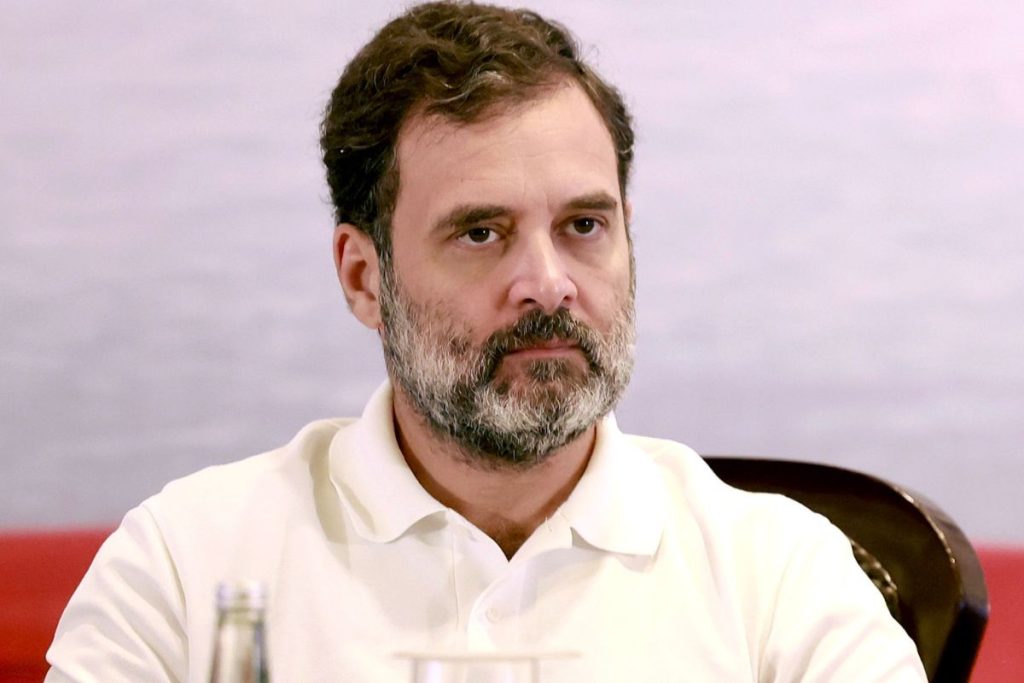
Just before the commencement of the Winter Session of Parliament, Rahul Gandhi met with 4-5 firebrand leaders of the Congress, including Sachin Pilot, Gaurav Gogoi, Dinesh Gundu Rao, and some young leaders from Delhi. It is said that during the conversation, Rahul mentioned that he had this misconception that Modi would retire from politics and step down as PM in 2026-27. Now it seems we will have to directly confront Modi in the 2029 and 2034 Lok Sabha elections. These young leaders wanted to know from Rahul who provides him with such incomplete political information, and then, in the course of the conversation, the names of Yogendra Yadav and Anil Jaihind surfaced. Jaihind is the president of the All India OBC Congress and has considered Sharad Yadav his political guru. It then became clear to these young leaders why, throughout the Bihar elections, Rahul was only chanting the ‘backward’ tune. It was then decided that the Congress must adopt a moderate path, distinct from left-leaning inclinations. An influential leader from Delhi present at the meeting candidly told Rahul, “The ‘Gandhi surname’ used to increase our vote share by 10% earlier, but this trend has also faded in the last few elections. The party remained united because of the Gandhi name, but even this concept has been shaken now; people are gradually leaving the party. We need to reconsider these matters afresh. You make promises to party leaders and then back out—in Chhattisgarh, the party suffered losses because Singhdev was not made CM; now, in Karnataka, if you don’t make D.K. (likely D.K. Shivakumar) after promising, the trust of leaders in the high command’s word will be lost.” Rahul listened attentively to this senior party leader’s words in silence but said nothing.
Changing Colours of Sangh
Tridib Raman
The talk of sacrifice, austerity, and dedication is now old; RSS leaders have now resolved to adopt the ‘Charvaka philosophy’. A senior RSS leader has had a luxurious building constructed in the posh Mangala area of Bangalore’s Posh Core. One floor of this building is in the leader’s name, the second in his brother’s name, and the third floor has been allotted to his sister. In the construction of this building, active support was received from a local BJP MLA, who owns his own construction company. This entire property has been shown under the umbrella of a family-run trust.
BJP MP’s Big Ask, Big Wait
A spirited BJP MP from Rajasthan, eager to become a Union minister, recently met the party’s Chanakya. When the MP expressed his aspirations, the senior BJP leader responded that there was currently no chance of his becoming a minister, as a cabinet reshuffle was not on the cards for now. He explained that once the government completes two years this May, a major reshuffle is likely, and only then could the MP’s name be considered. In short: the next Modi cabinet reshuffle is expected in May, and until then, it’s a waiting game.
