The 2025 Nobel Prizes in Physics and Chemistry have been awarded to researchers whose work expands the frontiers of quantum mechanics and materials science, offering fresh hope for tackling global challenges like climate change, energy storage, and quantum technologies.
Physics: Making Quantum Effects Visible at Macro Scale
This year’s Nobel Prize in Physics is awarded jointly to John Clarke (University of California, Berkeley, USA), Michel H. Devoret (Yale University & UC Santa Barbara, USA/France), and John M. Martinis (UC Santa Barbara, USA) “for the discovery of macroscopic quantum mechanical tunnelling and energy quantisation in an electric circuit.”
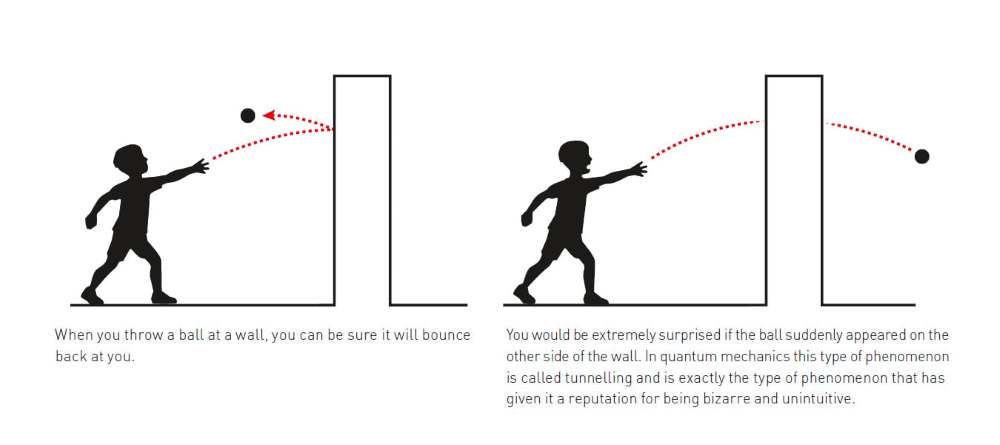
Their experiments during the mid-1980s used superconducting circuits (notably Josephson junctions) to demonstrate that quantum effects—commonly thought limited to the atomic or subatomic scale—can manifest in systems large enough to see and touch. Specifically, they showed that a current in these circuits can undergo quantum tunneling (passing through an insulating barrier) and that their energy levels are quantized, i.e., discrete rather than continuous.
This work is foundational for quantum technologies. It has paved the way for developments in quantum computation, sensing, and cryptography, where controlling and harnessing quantum behavior in larger, engineered systems is essential.
Chemistry: Designing “Rooms for Chemistry” in Molecular Frameworks
The 2025 Nobel Prize in Chemistry has been awarded to Susumu Kitagawa (Kyoto University, Japan), Richard Robson (University of Melbourne, Australia), and Omar M. Yaghi (University of California, Berkeley, USA) for their development of metal-organic frameworks (MOFs).
MOFs are crystalline, highly porous molecular structures made by linking metal ions (nodes) with organic (carbon-based) linkers. The resulting frameworks contain many internal cavities (“rooms”) through which gases and molecules can flow. By choosing different metals and linkers, scientists can tune MOFs for specific functions.
Some of the practical applications highlighted by the Nobel Committee include capturing carbon dioxide from air, purifying water (removing pollutants, toxic chemicals), extracting water from arid air, storing gases (for energy, etc.), and catalyzing chemical reactions.
Significance & Future Directions
Bridging Scales: In Physics, Clarke, Devoret, and Martinis demonstrate that quantum phenomena are not confined to microscopic systems. Achieving quantum effects in macroscopic (visible / engineered) systems helps close the gap between theory and real-world devices.
Grand Challenges: In Chemistry, the development of MOFs addresses pressing global issues — climate change (by CO₂ capture), water scarcity (water harvesting and purification), pollution mitigation, and clean energy. These materials offer engineered solutions.
Innovation & Fundamental Science: Both prizes reward not just incremental advances but foundational breakthroughs. The physics work re-examines the limits of quantum mechanics, while the chemistry work introduces a new paradigm in how molecular structures can be designed and controlled.