In the vast and diverse tapestry of Indian music, few artists embodied the spirit of a region as completely as Zubeen Garg did for Northeast India. More than just a playback singer, he was a composer, music director, actor, producer, and a cultural phenomenon whose journey from a young boy in Jorhat to the undisputed king of Assamese popular music is a legend etched in every chord he struck and every note he sang.
Over a career spanning more than three decades, Zubeen recorded over 38,000 songs in 40 languages and dialects. For many, he was not just a singer but a symbol of Assam’s cultural pride, carrying the state’s voice to national and international stages. His unfiltered social media presence and staunch political stands solidified his image not just as an artist, but as the voice of a people, until his tragic and untimely death on September 19, 2025, at the age of 52, during a scuba diving accident in Singapore.
The Meteoric Rise
Zubeen’s tryst with music began early, but it was the 1996 album Anamika that catapulted him into instant stardom. Songs like “Sneho Bhabi Jaao” and “Maya” were not just hits; they were a revolution. He brought a contemporary, rock-and-pop freshness to Assamese music, which was predominantly steeped in traditional and folk genres. His rugged voice, capable of incredible versatility—from soulful ballads to high-energy rock anthems—resonated with the youth.
This regional success was a prelude to his Bollywood breakthrough. The year 1999 saw the release of Yaadein, and with it, the iconic song “Tanha Tanha.” Composed by him, the track became a national sensation, establishing Zubeen Garg as a formidable talent on the all-India stage. He followed this with a string of hits like “Kya Karoon” from Shakalaka Boom Boom and the wildly popular “Jackpot” from Dhol. But it was his soul-stirring rendition of “Ya Ali” from the 2006 film Gangster that cemented his place in Bollywood lore, blending Sufi mysticism with raw emotion to touch millions.
However, unlike many regional artists who get absorbed by the Mumbai film industry, Zubeen’s roots remained firmly in the East. He continued to dominate the Assamese, Bengali, and Odia music and film scenes, delivering countless chartbusters and acting in successful films, proving that an artist could achieve pan-Indian fame without diluting his regional identity. Even in his final years, he remained prolific: in 2025, he released songs like “Akou Natun Prabhat Hobo” and “Ekhon Guitar,” contributed to the Assamese film Rudra, and was set to perform at the Northeast Festival in Singapore—his last journey.
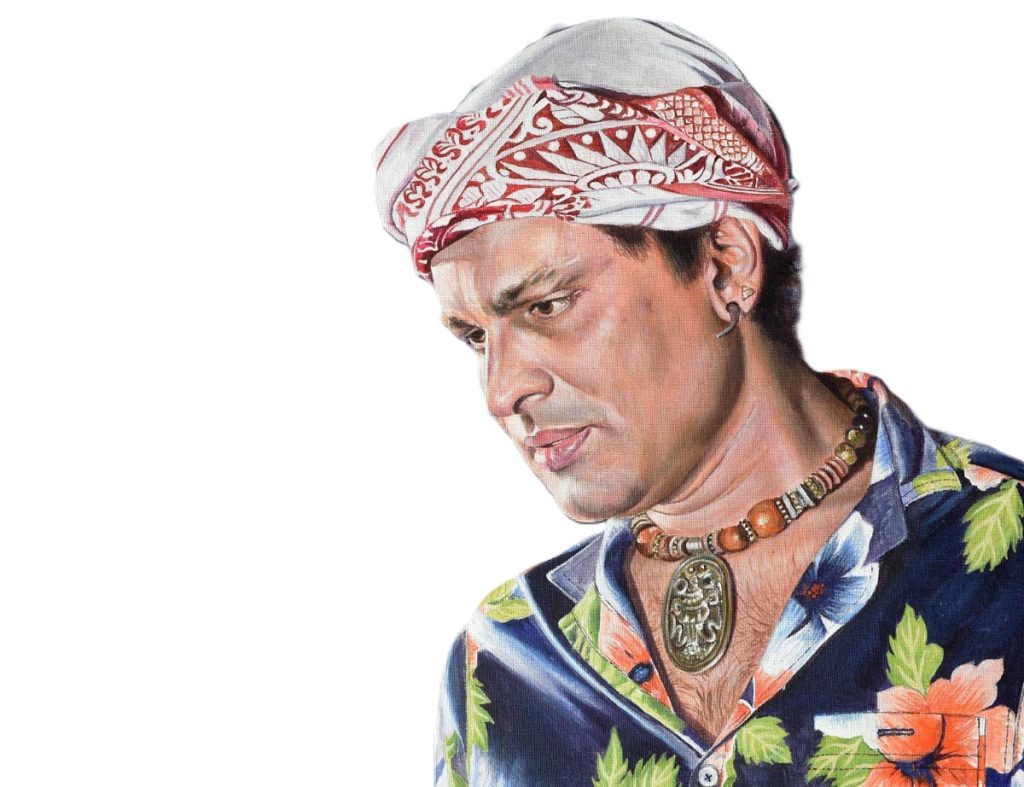
The Man Behind the Music
Zubeen’s journey is marked by an unapologetic individuality. He was a self-taught musician who played over 15 instruments, a fact that speaks volumes about his innate genius. His career was a sprawling empire of over 38,000 songs in 40 languages and dialects, including Assamese, Hindi, Bengali, Bhojpuri, and Tamil.
His foray into filmmaking with Mission China (2017) was a blockbuster, showcasing his ambition and his ability to create large-scale commercial cinema within Assam. But it was his annual Bihu concerts—massive open-air events drawing crowds in the lakhs—that truly demonstrated his connection with the masses. These were not mere concerts; they were cultural festivals where Zubeen, with his energetic performances and heartfelt interactions, became one with his audience. In April 2025, he canceled a show in Majuli as a mark of respect for victims of a terrorist attack, underscoring his deep empathy and sense of national duty.
The journey, however, wasn’t without its share of turbulence. Known for his fiery temperament and candid nature, Zubeen had public fallouts and controversies. In 2019, he sparked outrage with inflammatory remarks about Brahmins during a film promotion, later apologizing for the statement. In April 2024, at a Bihu concert, he questioned the divinity of Lord Krishna, calling him “a man, not a god,” which drew sharp criticism from orthodox groups but further highlighted his irreligious, free-spirited worldview—he often declared himself unbound by caste or religion. Yet, these incidents only made him more human and relatable to his fans, who saw in him an artist who refused to be polished or politically correct.
In 2024, his contributions were honoured with an honorary Doctor of Literature (D.Litt.) from the University of Science and Technology, Meghalaya, recognizing a dropout’s journey from matriculation to musical mastery.
The People’s Champion
In recent years, Zubeen Garg increasingly leveraged his immense popularity to champion social and political causes, transforming from a beloved artist into a powerful public intellectual.
The Anti-CAA Stance: His most defining political moment came during the widespread protests against the Citizenship (Amendment) Act (CAA) in 2019-2020. He became the musical voice of the resistance. His powerful performance of “Aah Aah Ulai Aah” at the protest sites became an anthem of defiance. He didn’t just sing; he spoke passionately about protecting the cultural and linguistic identity of Assam, aligning himself completely with the public sentiment. In 2024, amid accusations of softening his stance for political opportunism, he reaffirmed his unyielding opposition to the CAA, emphasizing his commitment to Assam’s identity over party lines.
Political Forays and Criticisms: He was openly critical of the ruling government’s policies, often using his social media platforms to voice his dissent. His brief and controversial announcement to contest the Assam state elections, though he later withdrew, highlighted his willingness to step directly into the political arena. Never aligning with any party, Zubeen positioned himself as a voice for the people, prioritizing identity and humanity above electoral games.
Social Commentary: From speaking out on environmental issues affecting the Brahmaputra to supporting local artists and industries, Zubeen used his platform to address a wide range of topics. His social media was a mix of music, personal reflections, and sharp political commentary, making him a constant topic of discussion. In his final months, he continued this legacy through theatre like Tick Tock Tick Tock (2025–26) and new releases that wove social themes into melody.
Enduring Legacy
Zubeen Garg’s popularity was a complex alchemy of immense talent, regional pride, and authentic rebellion. Born Zubeen Borthakur on November 18, 1972, in Tura, Meghalaya, to a musically inclined family, he adopted “Garg” from his gotra in the 1990s. Married to fashion designer Garima Saikia since 2002, he leaves behind a legacy intertwined with personal joys and sorrows—his sister tragically died in a road accident 23 years ago.
His life ended abruptly on September 19, 2025, during a yacht outing in Singapore ahead of his Northeast Festival performance. Ignoring lifeguard warnings, he removed his life jacket for a swim and suffered a heart attack, drowning despite CPR efforts. Rushed to Singapore General Hospital, he was declared dead at 1:10 p.m. IST. The postmortem confirmed accidental drowning, but controversy swirled: Assam Police filed FIRs against the event organizer Shyam Kanu Mahanta and his manager Siddhartha Sharma for negligence, probing if lapses in supervision contributed to the tragedy. Garima Saikia later requested withdrawal of the FIRs, seeking closure amid grief.
His body arrived in Guwahati on September 21, 2025, greeted by massive crowds and scuffles at the airport as fans overwhelmed security. Cremated with full state honors on September 23 at Kamarkuchi NC village—per family wishes and cabinet decision—the ceremony drew lakhs, with Prime Minister Narendra Modi, Chief Minister Himanta Biswa Sarma, and countless admirers paying homage. Tributes poured in: “Assam has lost not just a voice, but a heartbeat,” said Sarma. The New York Times hailed him as a unifier in a region rife with ethnic tensions.
“Zubeen Da is not just a singer; he is an emotion for Assam,” says Priyanka Das, a college student in Guwahati. “When he sings a Bihu song, he embodies our joy; when he sings a protest song, he voices our anger. He is us.” His ability to seamlessly switch between a romantic ballad, a foot-tapping Bihu number, and a hard-hitting rock protest song was unmatched. In an age of manufactured pop stars, Zubeen’s raw, unprocessed talent and his refusal to conform to celebrity norms made him a genuine icon.
Though his journey ended too soon, Zubeen Garg remains the undisputed maestro of the East—an artist whose voice, both literal and metaphorical, continues to define the contemporary spirit of his homeland. His story is a testament to the power of staying true to one’s roots while fearlessly carving one’s own path, inspiring generations to sing louder, love fiercely, and stand taller for what matters. As Assam heals, his music endures, a defiant symphony against silence.